490 CHAPTER 12: USING SYSTEM MANAGEMENT COMMANDS
privpassstring
:
Enter the encryption password with a character string, ranging
from 1 to 64 bytes.
acl
acl-list
: Enter the access control list for this user, based on USM name.
Description
Use the snmp-agent usm-user command to add a new community name or, if
you use the V3 parameter, a new user to an SNMP group.
Use the undo snmp-agent usm-user command to delete a user from an SNMP
group.
SNMP engineID (for authentication) is required when configuring remote users.
This command will not be effective if engineID is not configured.
For V1 and V2C, this command will add a new community name. For V3, it will
add a new user for an SNMP group. See Related Commands below.
Related commands: display snmp-agent, snmp-agent local engineid
Example
To add a user named JohnQ to the SNMP group guest, then configure the use of
MD5, and set the authentication password to
pass, enter the following:
<SW5500>system-view
System View: return to User View with Ctrl+Z.
[SW5500]snmp-agent usm-user v3 JohnQ guest authentication-mode md5
pass
undo snmp-agent Syntax
undo snmp-agent
View
System view
Parameter
None
Description
Use the undo snmp-agent command to disable all versions of SNMP running on
the server.
Any snmp-agent command will enable SNMP Agent.
Example
Disable the running SNMP agents of all SNMP versions.
<SW5500>system-view
System View: return to User View with Ctrl+Z.
[SW5500]undo snmp-agent
RMON Configuration
Commands
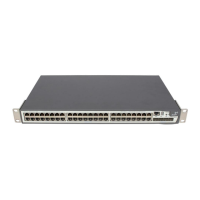
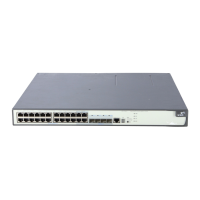
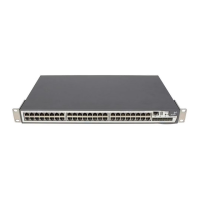
This section describes the Remote Monitoring (RMON) configuration commands
available on your Switch 5500G-EI.




 To Next Page