PROGRAMMING EXAMPLES PAGE 41
B1290: Squelch is 0
YOU: Next
B1290: Relay voice is On
YOU: Next
B1290: Acknowledge Voice is On
YOU:
B1290: Acknowledge Voice is Off
YOU: Next
B1290: Dial Tone is on
At this point you are finished programming and may hang up.
YOU: Next
Example 8: Activating an Annunciator Panel
In this system application, a B1290 is used to report alarms from a number of remote locations by turning the lamps
of an annunciator panel on and off.
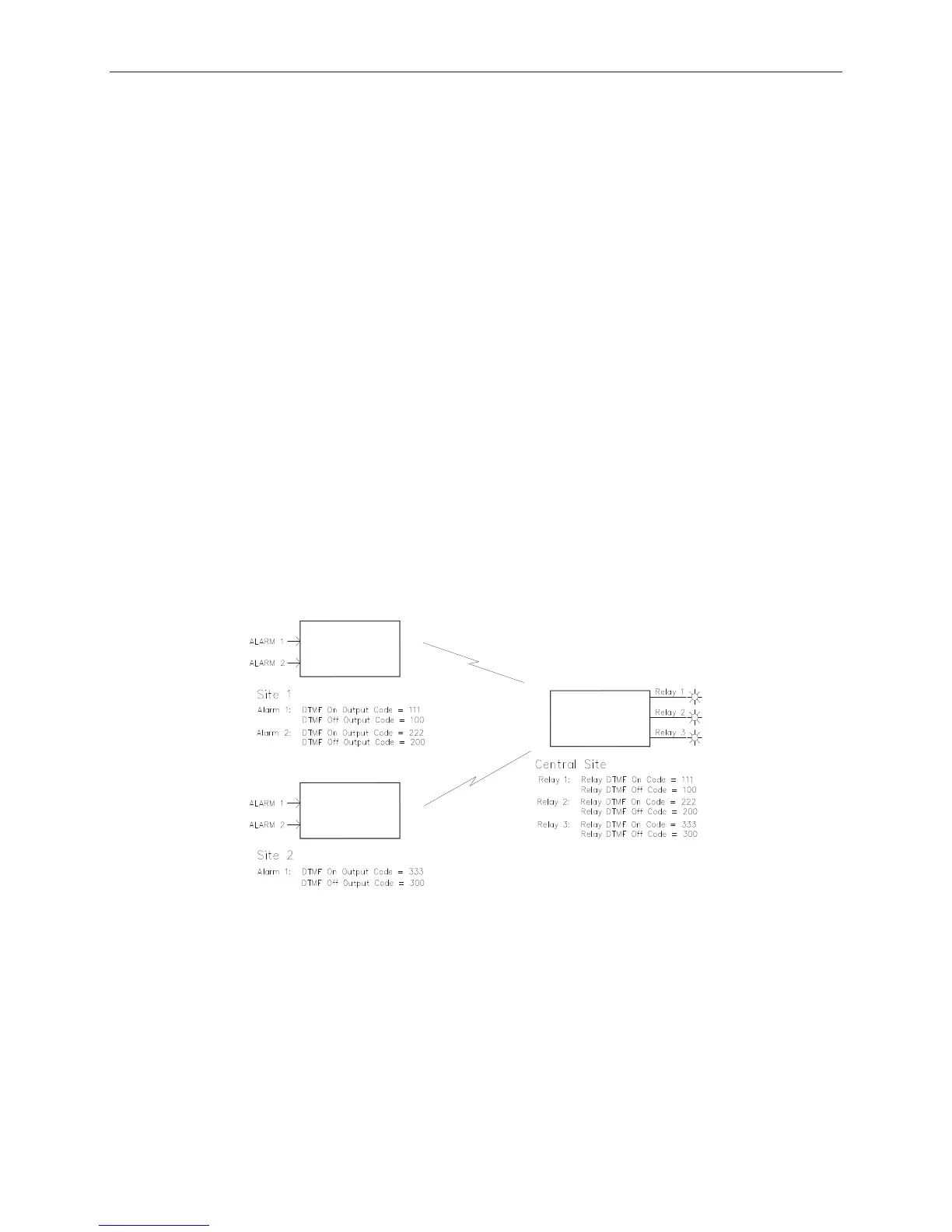
Figure 6 shows a system where two remote sites are transmitting DTMF codes to a central site. The Alarm On code
associated with the remote alarms is the same as the Relay On code at the central site. Similarly, the Alarm Off
codes at the remote locations are the same as the Relay Off codes at the central site.
When a remote alarm occurs, the DTMF code for that alarm is transmitted to the central site. On receiving this
code, the central site activates the relay associated with that alarm. When the alarm clears, the Off code is
transmitted from the remote, and the central site’s associated relay is released.
3UR7DON3OXV
3UR7DON3OXV
3UR7DON3OXV
Figure 6 Activating an Annunciator Panel
Example 9: Concentrating Alarms from Remote Sites
In the following example, a number of remote sites report their alarms over radio to a B1290, which concentrates the
alarms and reports them over the telephone.
Figure 7 is an example of two remote sites communicating with a central site to have their alarms announced over
the telephone. At the remote sites, the B1290s are programmed to operate over radio. They are programmed with
an alarm On output code and an Acknowledge Code. At the central site, the B1290 is programmed to accept remote
alarm inputs on alarms 1, 2, and 3, and is connected to a telephone.



 To Next Page