C
HAPTER
14
| Basic Administration Protocols
Ethernet Ring Protection Switching
– 503 –
■
A sub-ring may be attached to a primary ring with or without a
virtual channel. A virtual channel is used to connect two
interconnection points on the sub-ring, tunneling R-APS control
messages across an arbitrary Ethernet network topology. If a virtual
channel is not used to cross the intermediate Ethernet network,
data in the traffic channel will still flow across the network, but the
all R-APS messages will be terminated at the interconnection points.
■
Sub-ring with R-APS Virtual Channel – When using a virtual channel
to tunnel R-APS messages between interconnection points on a sub-
ring, the R-APS virtual channel may or may not follow the same
path as the traffic channel over the network. R-APS messages that
are forwarded over the sub-ring’s virtual channel are broadcast or
multicast over the interconnected network. For this reason the
broadcast/multicast domain of the virtual channel should be limited
to the necessary links and nodes. For example, the virtual channel
could span only the interconnecting rings or sub-rings that are
necessary for forwarding R-APS messages of this sub-ring. Care
must also be taken to ensure that the local RAPS messages of the
sub-ring being transported over the virtual channel into the
interconnected network can be uniquely distinguished from those of
other interconnected ring R-APS messages. This can be achieved by,
for example, by using separate VIDs for the virtual channels of
different sub-rings.
Note that the R-APS virtual channel requires a certain amount of
bandwidth to forward R-APS messages on the interconnected
Ethernet network where a sub-ring is attached. Also note that the
protection switching time of the sub-ring may be affected if R-APS
messages traverse a long distance over an R-APS virtual channel.
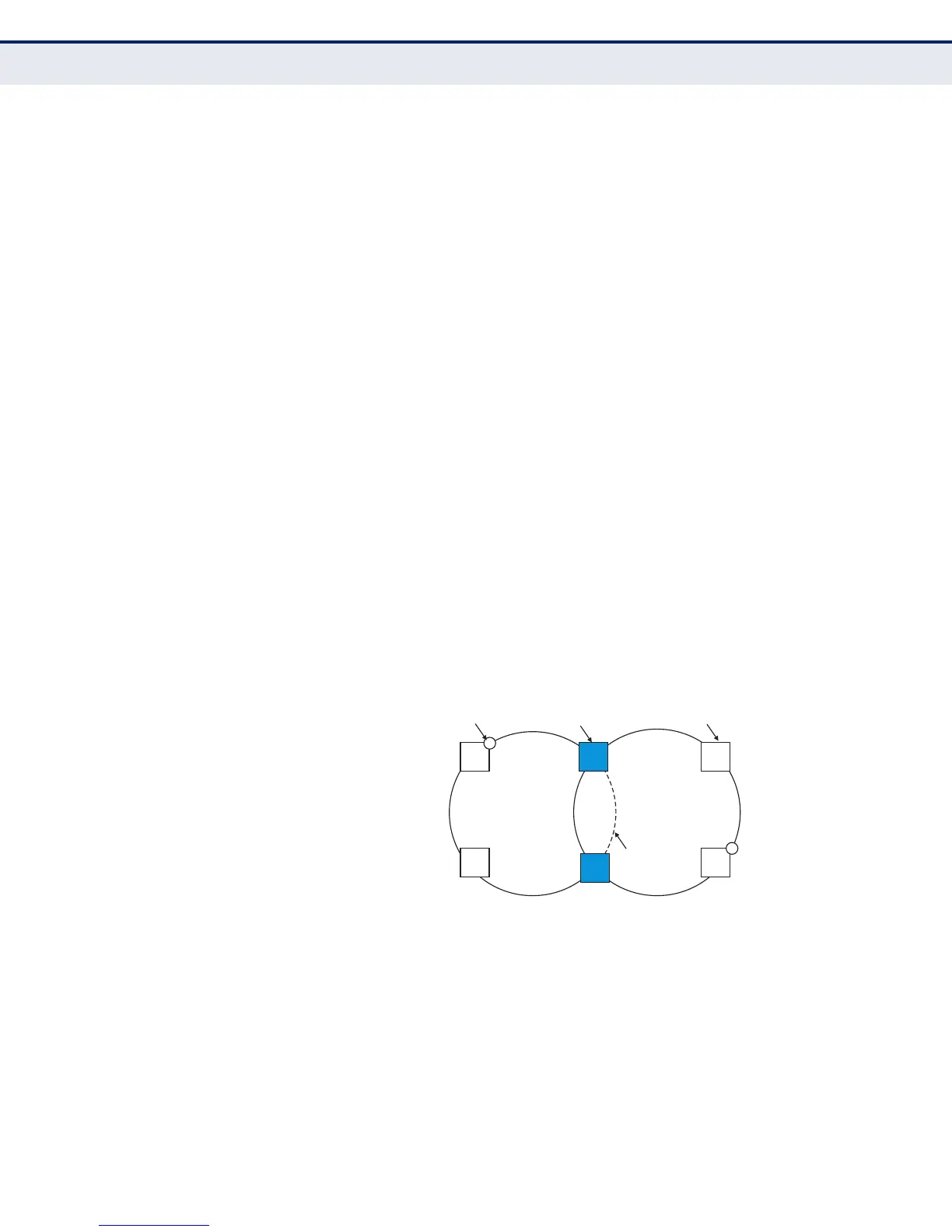
Figure 288: Sub-ring with Virtual Channel
■
Sub-ring without R-APS Virtual Channel – Under certain
circumstances it may not be desirable to use a virtual channel to
interconnect the sub-ring over an arbitrary Ethernet network. In
this situation, the R-APS messages are terminated on the
interconnection points. Since the sub-ring does not provide an R-
APS channel nor R-APS virtual channel beyond the interconnection
points, R-APS channel blocking is not employed on the normal ring
links to avoid channel segmentation. As a result, a failure at any
ring link in the sub-ring will cause the R-APS channel of the sub-ring
to be segmented, thus preventing R-APS message exchange
between some of the sub-ring’s ring nodes.
Sub-ring
with Virtual
Channel
Virtual
Channel
RPL Port
Interconnection Node
Ring Node
Major Ring








 To Next Page