214603 349 Revision A
5.9 Electrical System
5.9.1 Preventing Electrical System Damage
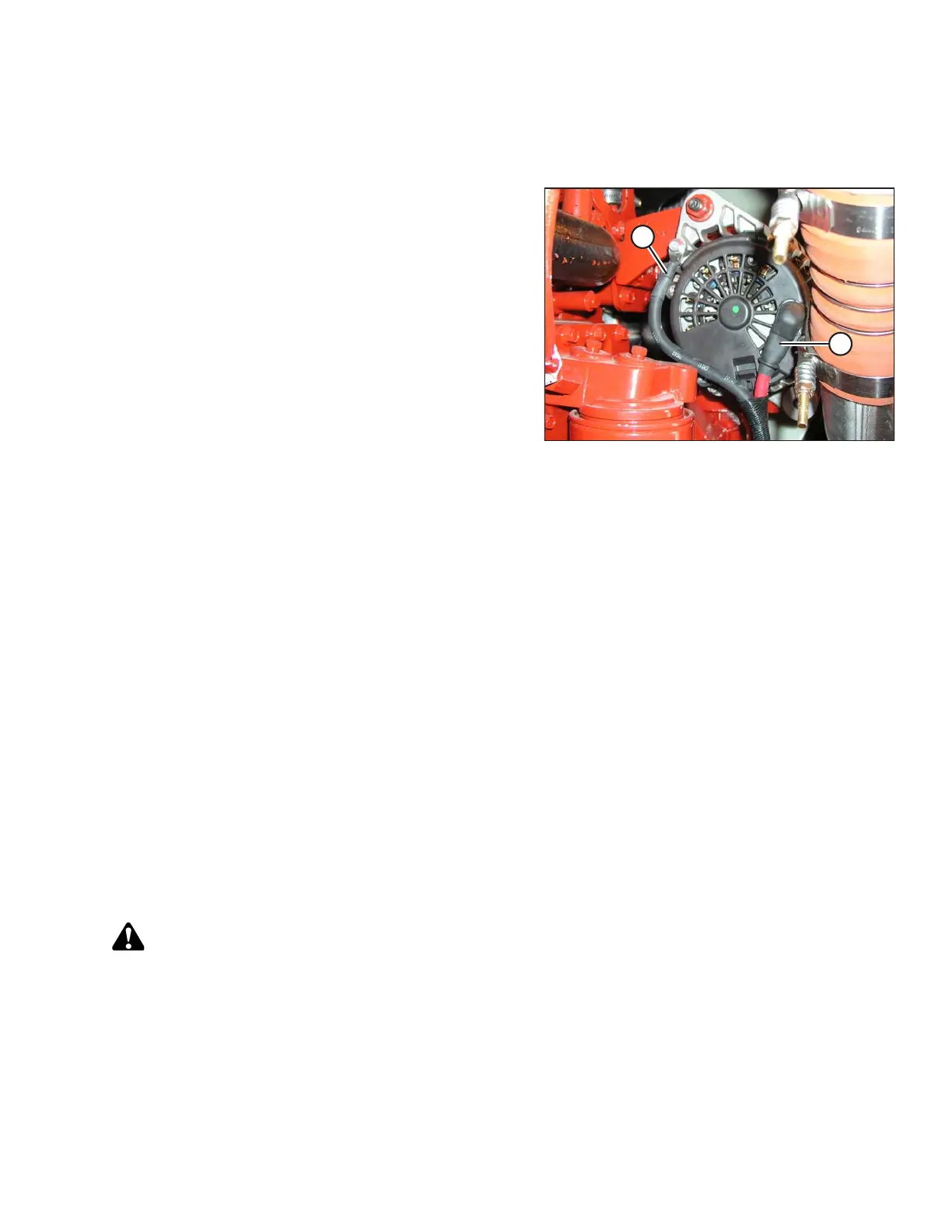
Figure 5.113: Alternator
A - Negative Terminal B - Positive Terminal
To prevent electrical system damage, take the following
precautions:
• Carefully observe polarity when attaching
booster battery.
• Do NOT short across battery or alternator terminals, or
allow battery positive (+) cable or alternator wire to
become grounded.
• Be sure alternator connections are correct before cables
are connected to battery.
• When welding on any part of the machine, disconnect
battery cables and alternator wire. Refer to 1.8 Welding
Precautions, page 9.
• Always disconnect battery ground cable when working
with the alternator or regulator.
• Never attempt to polarize alternator or regulator.
• If wires are disconnected from the alternator, ensure that
terminals (A) and (B) are connected properly.
• Never ground the alternator field terminal or field.
• Never connect or disconnect alternator or regulator
wires with battery connected or alternator operating.
• Always disconnect cables from the battery when using a
charger to charge battery in windrower.
• Ensure all cables are securely connected before
operating engine.
• To avoid damage to circuit boards by static electricity,
disconnect negative battery terminal when replacing
electronic control modules. Additionally, when handling
electronic control modules, avoid touching the connector
pins directly.
5.9.2 Battery
Maintaining Batteries
CAUTION
Do NOT attempt to service battery unless you have the proper equipment and experience to perform the
job. Have it done by a qualified Dealer.
• Check battery charge once a year, or more often if operating in cold weather. Hydrometer readings should be
1.260 to 1.300. Readings below 1.250 indicate charging is required. Refer to Charging the Batteries, page 350.
Add electrolyte if necessary. Refer to Adding Electrolyte to the Battery, page 353.
• Keep batteries clean by wiping with a damp cloth.
MAINTENANCE AND SERVICING



 To Next Page