214603 192 Revision A
Towing the Windrower (Emergency)
Towing the windrower is NOT recommended. If the windrower gets stuck, or must be towed onto a truck or trailer,
follow these steps:
IMPORTANT:
• NEVER attempt to start the windrower by towing it. Serious damage to the final drives may occur.
• Failure to disengage final drives before towing will result in serious transmission damage.
• Only tow the windrower for a short distance, on level ground, and at slow speed.
DANGER
Uncontrolled heavy equipment. With final drives disengaged (turned inward), brakes and steering do NOT
work. After towing, place blocks under front and rear wheels to prevent uncontrolled movement.
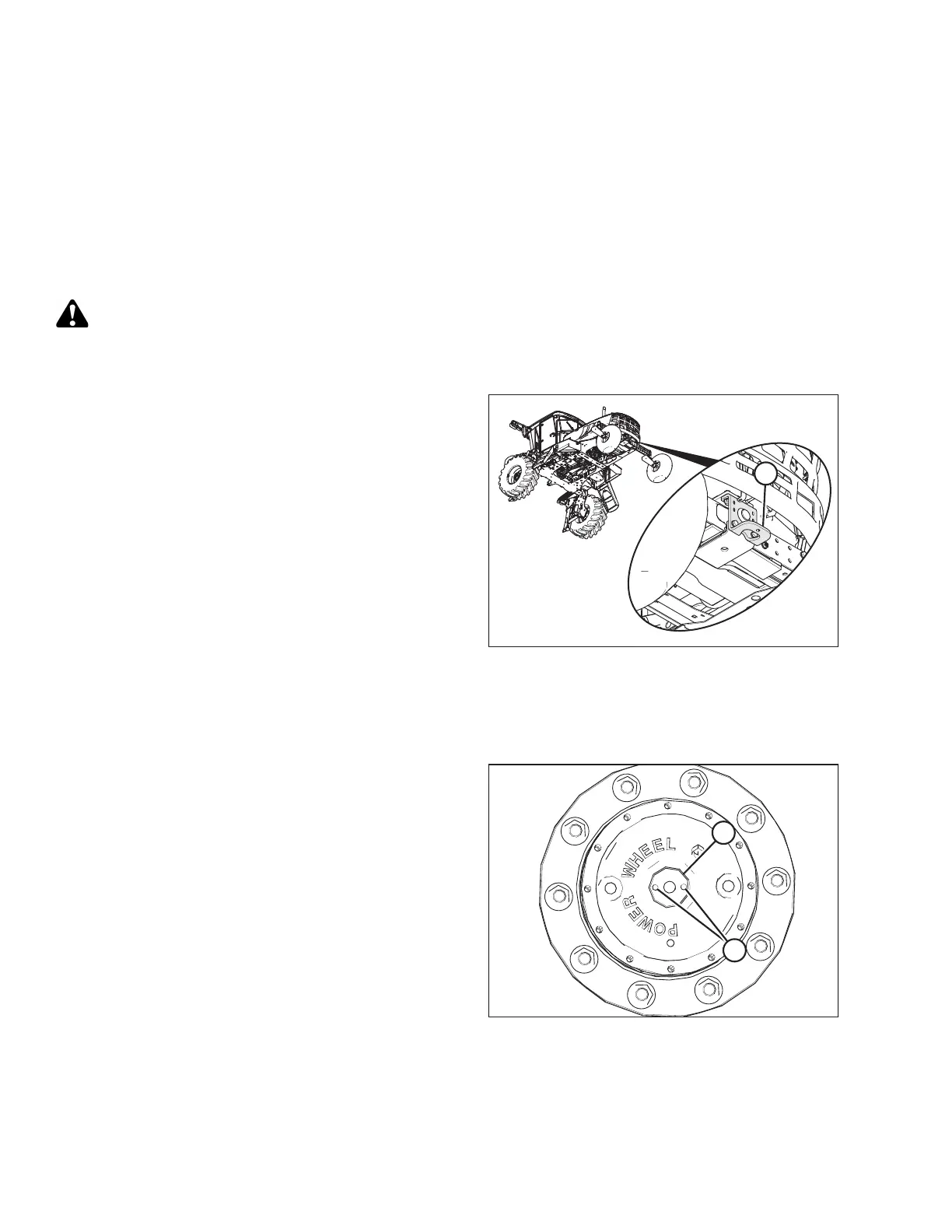
Figure 4.62: Emergency Towing
1. Before towing the vehicle, disengage the final drives.
Refer to Disengaging Final Drives, page 192.
2. Use attachment point (A) to tow if windrower gets stuck,
or when pulling onto a truck or trailer for transport.
3. When towing is complete, place blocks under front and
rear wheels to prevent uncontrolled movement.
4. Engage final drives. Refer to Disengaging Final Drives,
page 192.
Disengaging Final Drives
Disengage and engage final drives as follows:
Figure 4.63: Final Drives
1. Remove the two bolts (A) at the center of drive wheel.
2. Remove cap (B) and flip over so that dished side faces
in. The cap presses a pin that disengages the gearbox.
3. Repeat for the other drive wheel.
4. After towing, reverse cover (B) to engage final drives.
Be sure plunger at center of wheel pops out to
engage drive.
NOTE:
Engaging the final drives may require rocking the
wheels slightly.
OPERATION




 To Next Page