GENERAL INSTRUCTIONS
SHOP MANUAL
Ch 0 page 19
Risks
Attempting to remove caps, drain oil or coolant, or replacing filters
may lead to serious burns, if done when hot. Relieve all pressure
in cooling system, before any lines, fittings or related items are
disconnected.
The cooling system is over-pressurized when the coolant is hot.
Coolant that leaks or bursts out may cause scalding.
Coolant consists of water and corrosion inhibitor, and if necessary,
anti-freeze. The anti-freeze may consist of ethylene glycol.
Ethylene glycol and corrosion inhibitor are injurious and dangerous
to consume. Splashes in the eyes are dangerous and, in contact
with the skin, such substances can penetrate and cause dermatitis.
Coolant may also consist of other mixtures that may imply other
risks.
Protective measures
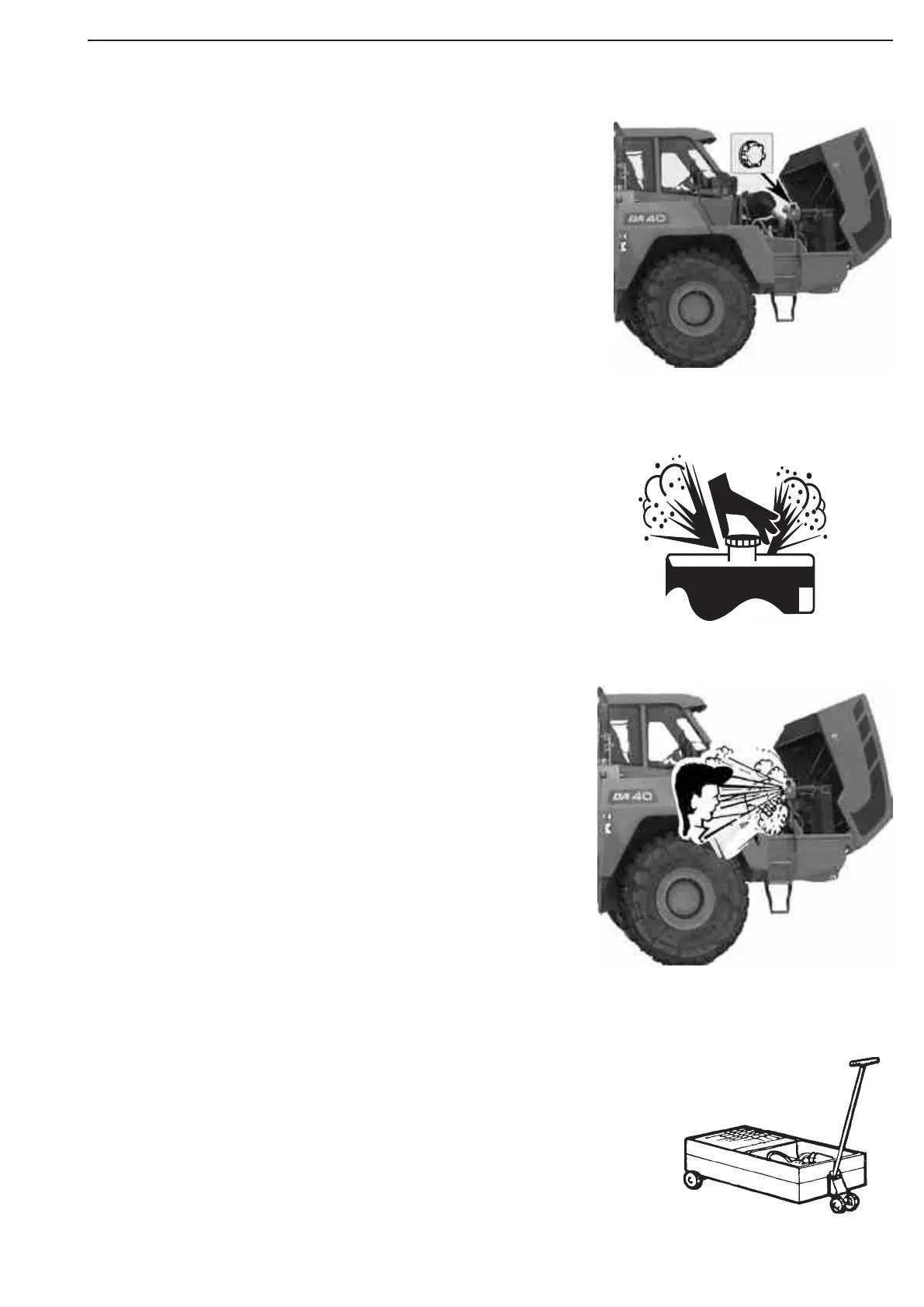
To prevent hot oil or coolant from spraying out, stop engine and
wait for oil and coolant to cool. Using gloves, slowly loosen cap to
relieve pressure.
If possible, avoid working with coolant lines and containers when
coolant is still hot.
First remove the filler cap carefully to release the overpressure. Hot
steam and coolant may burst out.
If there is a risk of splashing you must use rubber gloves and pro-
tective goggles. Change clothes if coolant has splashed on them.
Contact with the skin may be dangerous.
Use special equipment for draining and filling e.g.a. cart with
container and pump. It is not permitted to dump coolant in sewer
systems or on the ground.
Protection against coolant
• Preferably wait until coolant has become cold
• Remove filler cap carefully
• Use rubber gloves and protective goggles
• Use special equipment for draining and filling
Coolant


 To Next Page