Engine
SHOP MANUAL
Ch 1 page 165
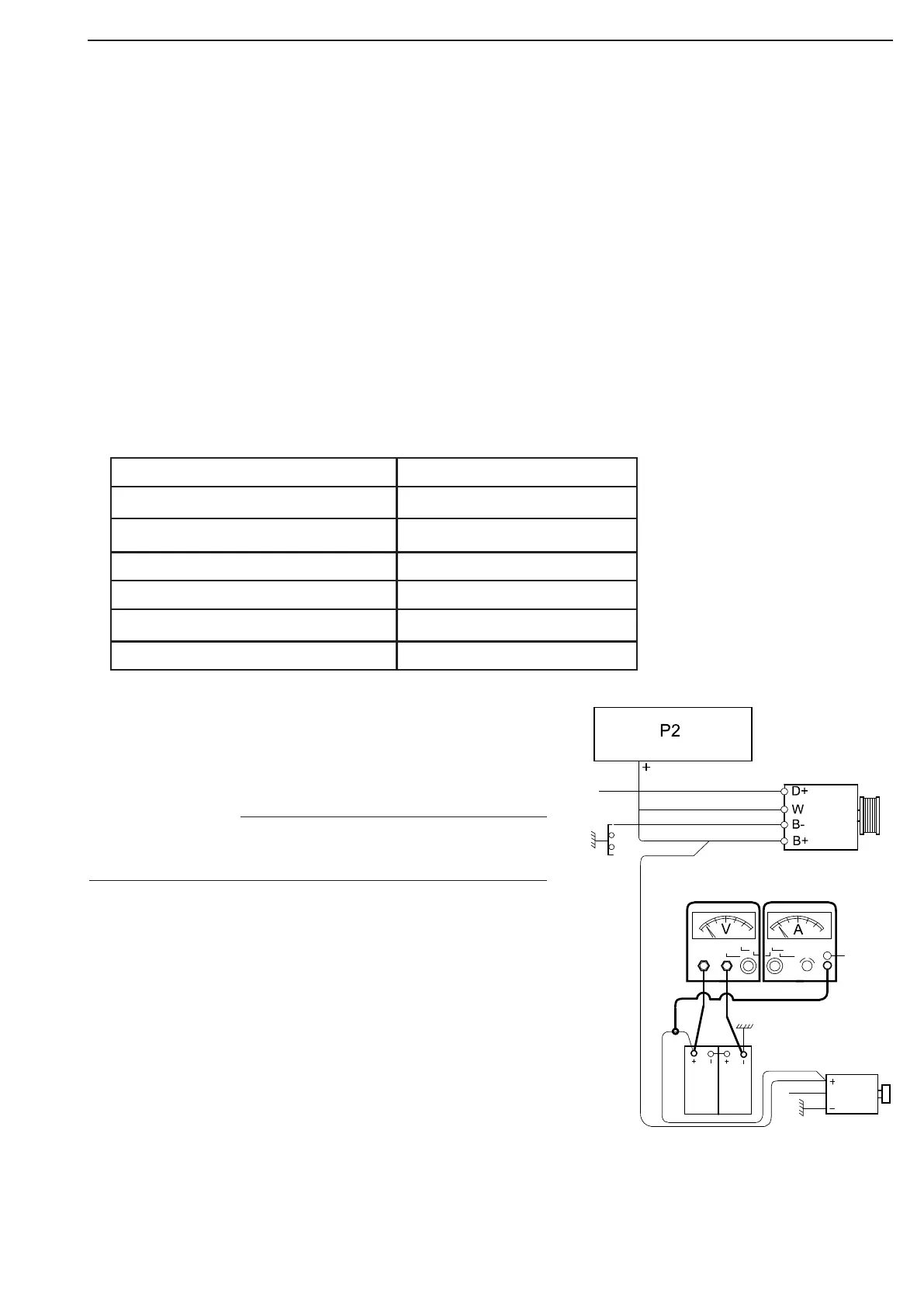
Connection to central electric unit
4. Hold the engine speed at 500 rpm and apply loads to the system by using the vehicle’s current consumers in
accordance with the test report, column Check value. See below for examples of current consumers.
Add the current you read at the batteries to the sum of the loads you are applying.
Example using 80 A Bosch alternator: If you obtained a value of 10 A at the batteries, you only need to apply a
load of 25 A to the alternator instead of 35 A. 10 A+25 A=35 A
5. Run the engine for a time while you are applying the load. Read the voltmeter again. It should still not show
less than 27 V.
Examples of current consumers:
Cab fan at maximum approx. 10 A
Main beam approx. 6 A
Two auxiliary lamps approx. 6 A
Seat heater approx. 2.5 A/seat
Electrically heated mirrors approx. 2.5 A/mirror
Coolant-operated cab heater approx. 6 A
Radio approx. 1.5 A
Voltage test
Carry out this test especially if you suspect there is overcharging.
1. Connect the ammeter and voltmeter to the central electric unit
as illustrated. Run the engine at approximately 500 rpm.
Connection to batteries
2. Load the system with approximately 10-20A by using various
current consumers.
3. Allow the engine to run for a while. The voltage on the voltmeter
should be 28V +/- 0.5V at 20°C.
Phase measurement
Keep the voltmeter connected as it was for the voltage test, but
reset it to the AC voltage position.
The voltmeter should be stable around 100 mV and at most 250
mV. If this performance is not achieved, the alternator is defective
and must be renewed.
The batteries should be fully charged to give good results,
i.e. maximum consumption at 10A.
NOTE
Figure 321



 To Next Page