SHOP MANUAL
Ch 6 page 70
ELECTRICAL SYSTEM
Sensor engine coolant temperature
Switch engine oil pressure
The switch closing at oil pressure: < 0,7 bar 11 Ω
The switch open at oil pressure: 1,1 bar ± 0,15 bar 111 Ω
Measure between : 542 - 1 and 2
543 - 1 and 2
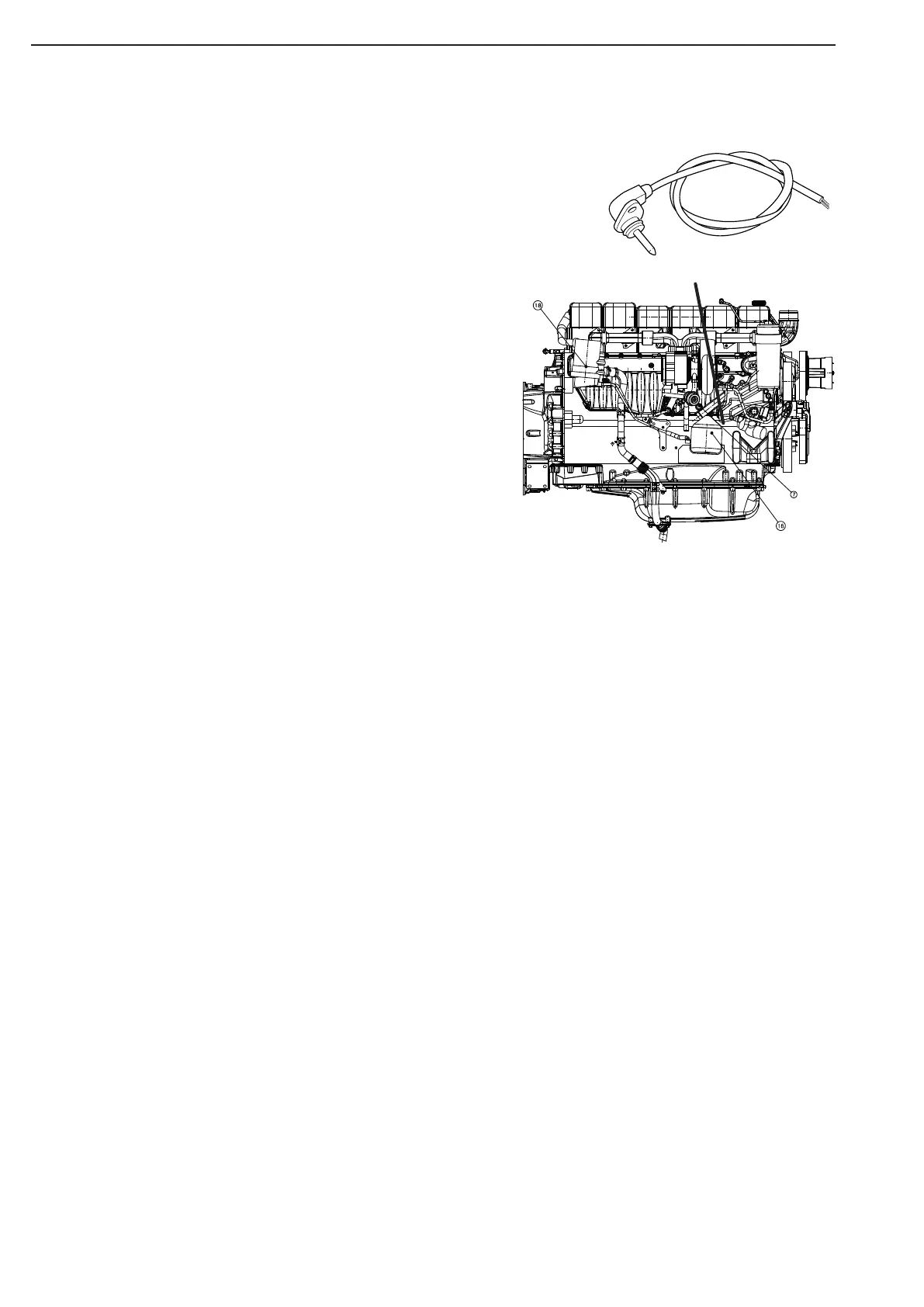
T33, Coolant temperature sensor
Function:
Coolant temperature sensor, XPI fuel system
Applies to engines with cylinder block generation 2.
The engine control unit uses the value from the coolant temperature
sensor to adjust the fuel quantity and injection timing when starting
the engine and when the engine is cold. The coolant temperature
also affects the engine idling speed and maximum engine speed
when the engine is cold and the engine power when it is too warm.
Directly after a cold start, the engine control unit limits the engine
speed to 1000 rpm in order to protect the engine, the engine idling
speed is raised to 600 rpm.
The length of time engine speed limitation is engaged varies
depending on the coolant temperature.
Less than +10°C, approximately 40 seconds
More than +20°C, approximately 8 seconds
The engine idling speed returns to normal when the coolant has reached 20 - 60°C (the temperature limit differs
between engine types).
In certain engines, the engine power is limited when the coolant temperature exceeds a certain temperature,
between 116 °C - 117 °C depending on the engine type. The engine power is limited so that the engine does
not overheat, and a fault code is generated at the same time.
The sensor is of the NTC type, which means that its resistance is temperature dependent. If the temperature
increases, the resistance in the sensor drops. The engine control unit converts the sensor resistance to voltage.
If the voltage is outside a certain range a fault code will be generated and the control unit will operate according
to a preset temperature value.
The engine will then have poorer cold-start characteristics and will emit more white smoke in cold weather.
The coolant temperature affects EGR, white smoke limitation and adaptations.
The sensor measures the coolant temperature in the cylinder block after the coolant has passed the combus-
tion chamber. The sensor consists of an NTC (Negative Temp Coefficient) thermistor, where resistance drops
as temperature increases. The sensor is temperature-sensitive between -40 and +120ºC.
Resistance at 20 ºC is 2419 ± 85 Ω.
T33
Figure 52



 To Next Page