178 Virtual Channels
imc CANSAS Users Manual - Doc. Version 1.9 - 05.12.2014© 2014 imc Meßsysteme GmbH
4.10.63 Time determination (only for DI16 modules)
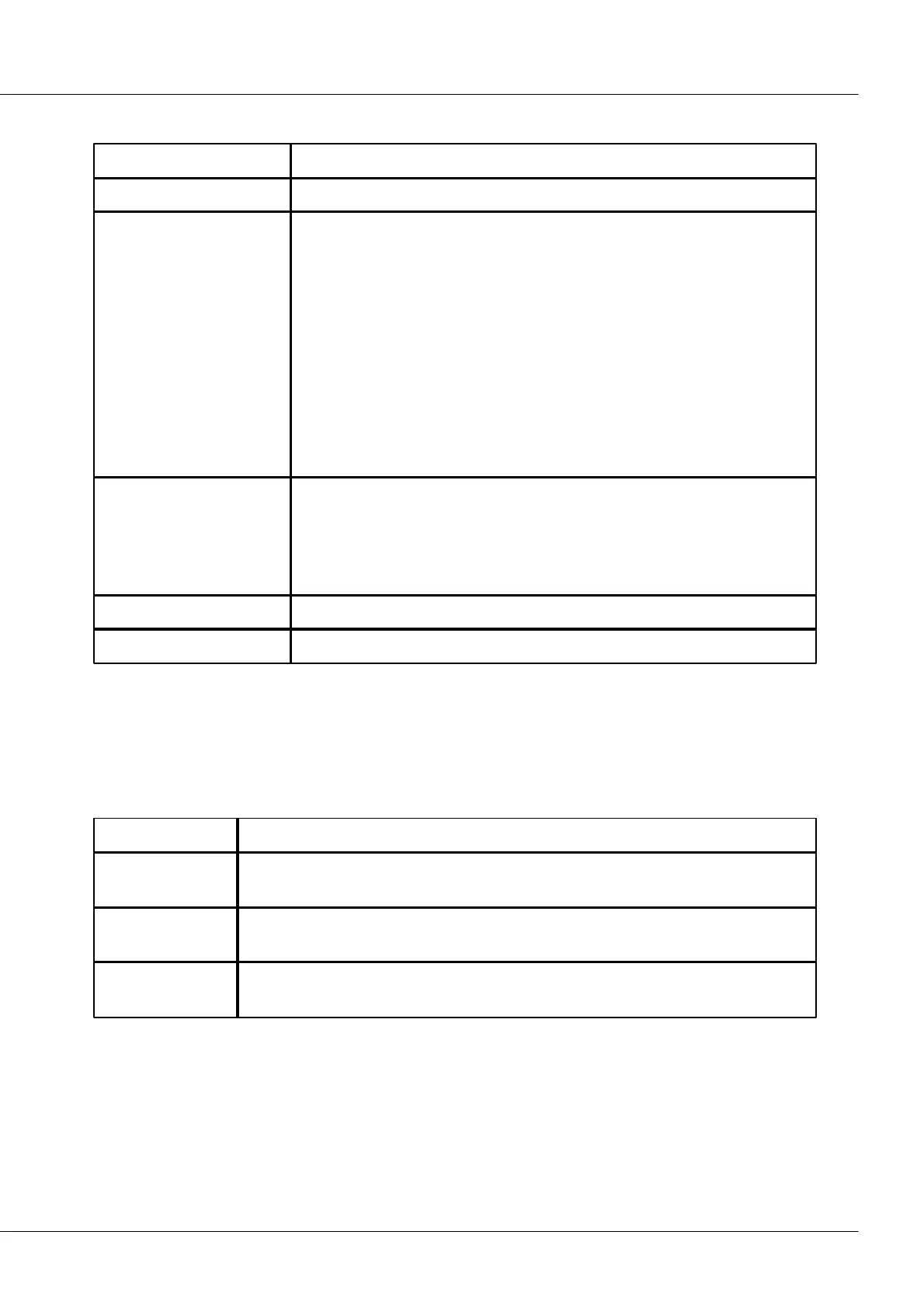
Channel for whose signal events the time is to be determined
Maximum measurable time between selected starting and stopping edge
3 s
6 s
12s
25 s
50 s
100 s
3 min
5 min
15 min
30 min
60 min
Triggering or stopping of the reading by a positive or negative edge:
start pos. edge, stop pos. edge
start pos. edge, stop neg. edge
start neg. edge, stop pos. edge
Data rate of result channel.
Channel containing time determination results
Description: Returns the time between two selectable events (Start/Stop) on the digital input channel.
The time between the two edges must not exceed the selected input range. If the time measurement
does exceed the limit, the range's endpoint is returned.
If no current counter result can be determined for a result clock pulse interval, the last result is returned
again. If multiple time counts are triggered during one result clock pulse interval, the most recent result is
returned.
The time reading starts upon reception of a positive edge (transition from 0 to 1),
and ends upon reception of the next positive edge.
The time reading starts upon reception of a positive edge (transition from 0 to 1),
and ends upon reception of the next negative edge (transition from 1 to 0).
The time reading starts upon reception of a negative edge (transition from 1 to
0), and ends upon reception of the next positive edge (transition from 0 to 1).
Notes: The input range and the module's sampling rate influence the precision of the time measurement.
Only digital input channels are allowed.
The input channel's sampling rate may only be 0.1 ms, 0.2 ms, 0.5 ms or 1 ms. The higher the sampling
rate is, the more exactly the time can be determined.
For the most precise frequency measurements, use the incremental encoder module INC4.


 To Next Page