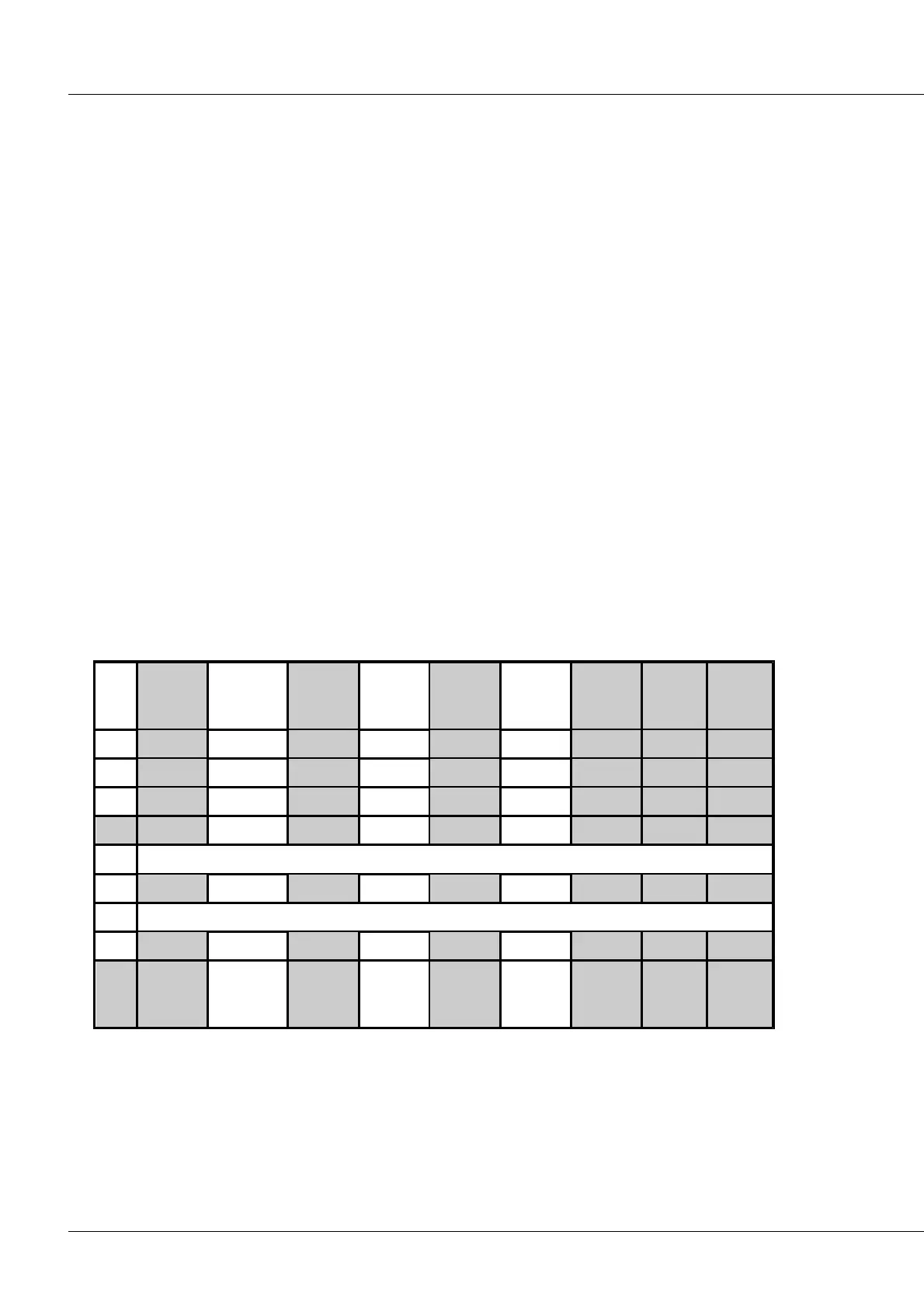
CAN-Bus connectors 525
imc CANSAS Users Manual - Doc. Version 1.9 - 05.12.2014© 2014 imc Meßsysteme GmbH
8.1.1.1 CAN-Bus wiring
Unless 9-line cables are used for the CAN-Bus, observe the following: Pins 2 and 7 are absolutely
necessary for transfer on the CAN-Bus. The CAN-Bus ground is also necessary. This may not be obvious,
but consider that differentially transmitted signals require a reference, for which reason a line connected
to the CAN-Bus ground must also be included. Either Pin 3 or Pin 6 can be used for this purpose.
Situations can also arise in which the CAN-ground is not needed: for instance, in a vehicle, where it is
possible to access Chassis potential anywhere, instead of using a line to Pin 3. In this case, Chassis simply
replaces the line to Pin 3.
Other lines can be included as required, for example a synchronization line or supply line.
Note also when using DSUB-plugs and the cables that there is a maximum current which DSUB-plugs can
carry. This particularly applies to the DSUB-plugs on the imc CANSAS-modules and the internal
connection of all of this plug's pins. The current should not exceed approx. 1A. It may be necessary to use
a correspondingly high supply voltage for the modules, or the separate green terminal for the supply.
Also give regard to the cables' cross-sections. The CAN-cables with 9-pin, DSUB-plug which are included in
the standard package are not designed to carry large currents.
8.1.1.2 Notes for the use of CANcabs
Problem: Pins 4 and 9 are used in imc CANSAS for Reset and OneWire EEPROM. When a CANcabs extra
cable from any of the companies Vector, dSPACE or KVASER is used, it results in duplicate pin assignment,
since these pins are also used in those cases.
Remedy: The contacts Pin 4 and Pin 9 in the CAN-connector must be disconnected from their leads to the
CANcabs!
This applies to the following CANcabs:
RL: reserved, may not be connected


 To Next Page