Chapter 1
24 MIPS R4000 Microprocessor User's Manual
Data Formats and Addressing
The R4000 processor uses four data formats: a 64-bit doubleword, a 32-bit
word, a 16-bit halfword, and an 8-bit byte. Byte ordering within each of
the larger data formats—halfword, word, doubleword—can be
configured in either big-endian or little-endian order. Endianness refers
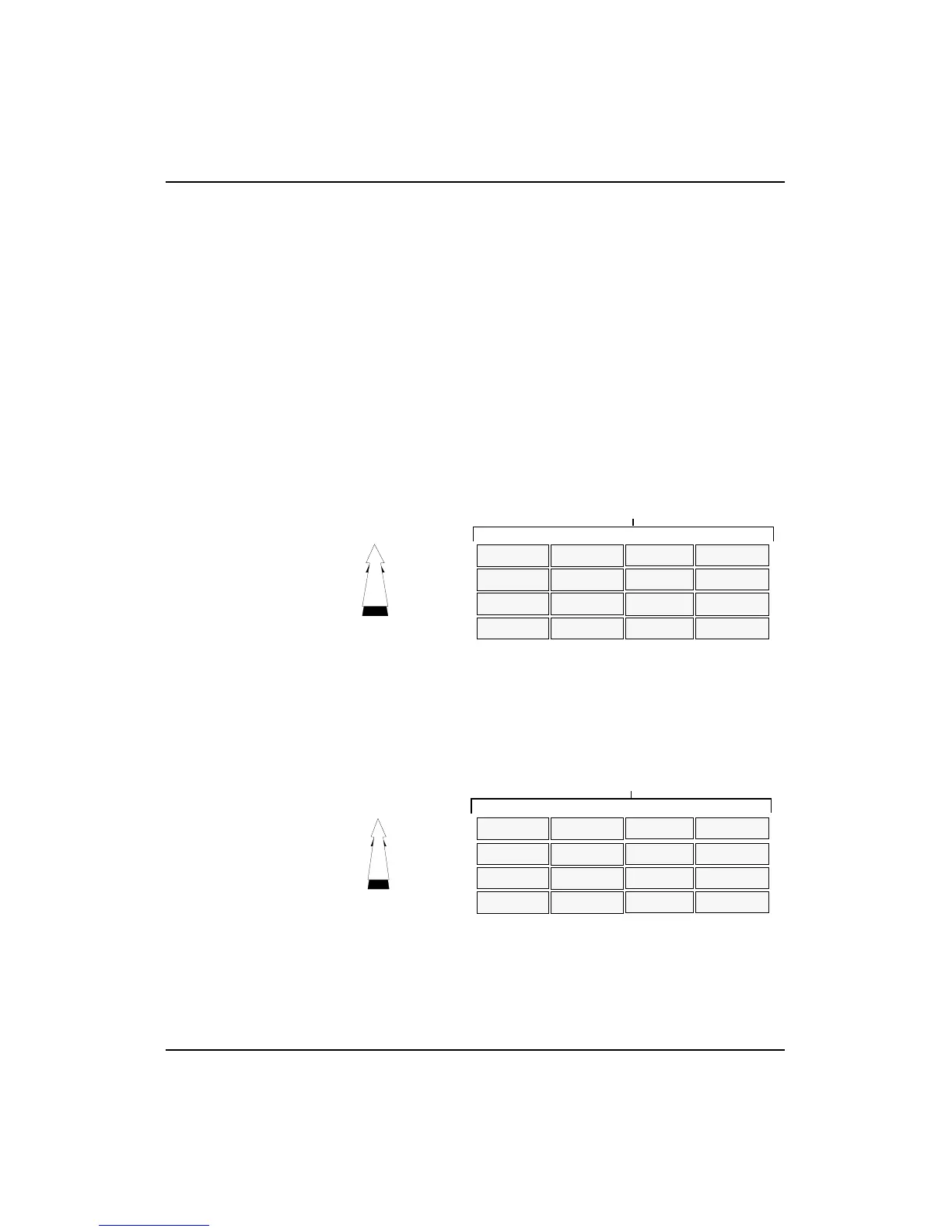
to the location of byte 0 within the multi-byte data structure. Figures 1-4
and 1-5 show the ordering of bytes within words and the ordering of
words within multiple-word structures for the big-endian and little-
endian conventions.
When the R4000 processor is configured as a big-endian system, byte 0 is
the most-significant (leftmost) byte, thereby providing compatibility with
MC 68000
and IBM 370
conventions. Figure 1-4 shows this
configuration.
Figure 1-4 Big-Endian Byte Ordering
When configured as a little-endian system, byte 0 is always the least-
significant (rightmost) byte, which is compatible with iAPX
x86 and DEC
VAX
conventions. Figure 1-5 shows this configuration.
Figure 1-5 Little-Endian Byte Ordering
Higher
Address
Lower
Address
Word
4
8
12
Address
Bit #
89 1110
45 76
01 32
12 13 1514
0
31 24 23 16 15 8 7 0
Higher
Address
Lower
Address
Word
4
8
12
Address
31 24 23 16 15 8 7 0
Bit #
11 10 89
76 45
32 01
15 14 1213
0


 To Next Page