User Manual UMN:CLI
V5808
323
8.5 Dynamic Host Configuration Protocol (DHCP)
Dynamic Host Configuration Protocol (DHCP) is a TCP/IP standard for simplifying the
administrative management of IP address configuration by automating address
configuration for network clients. The DHCP standard provides for the use of DHCP
servers as a way to manage dynamic allocation of IP addresses and other relevant
configuration details to DHCP-enabled clients on the network.
Every device on a TCP/IP network must have a unique IP address in order to access the
network and its resources. The IP address (together with its relevant subnet mask)
identifies both the host computer and the subnet to which it is attached. When you move
a computer to a different subnet, the IP address must be changed. DHCP allows you to
dynamically assign an IP address to a client from a DHCP server IP address database on
the local network.
The DHCP provides the following benefits:
Saving Cost
Numerous users can access the IP network with a small amount of IP resources in the
environment that most users do not have to access the IP network at the same time all
day long. This allows the network administrators to save the cost and IP resources.
Efficient IP Management
By deploying DHCP in a network, this entire process is automated and centrally managed.
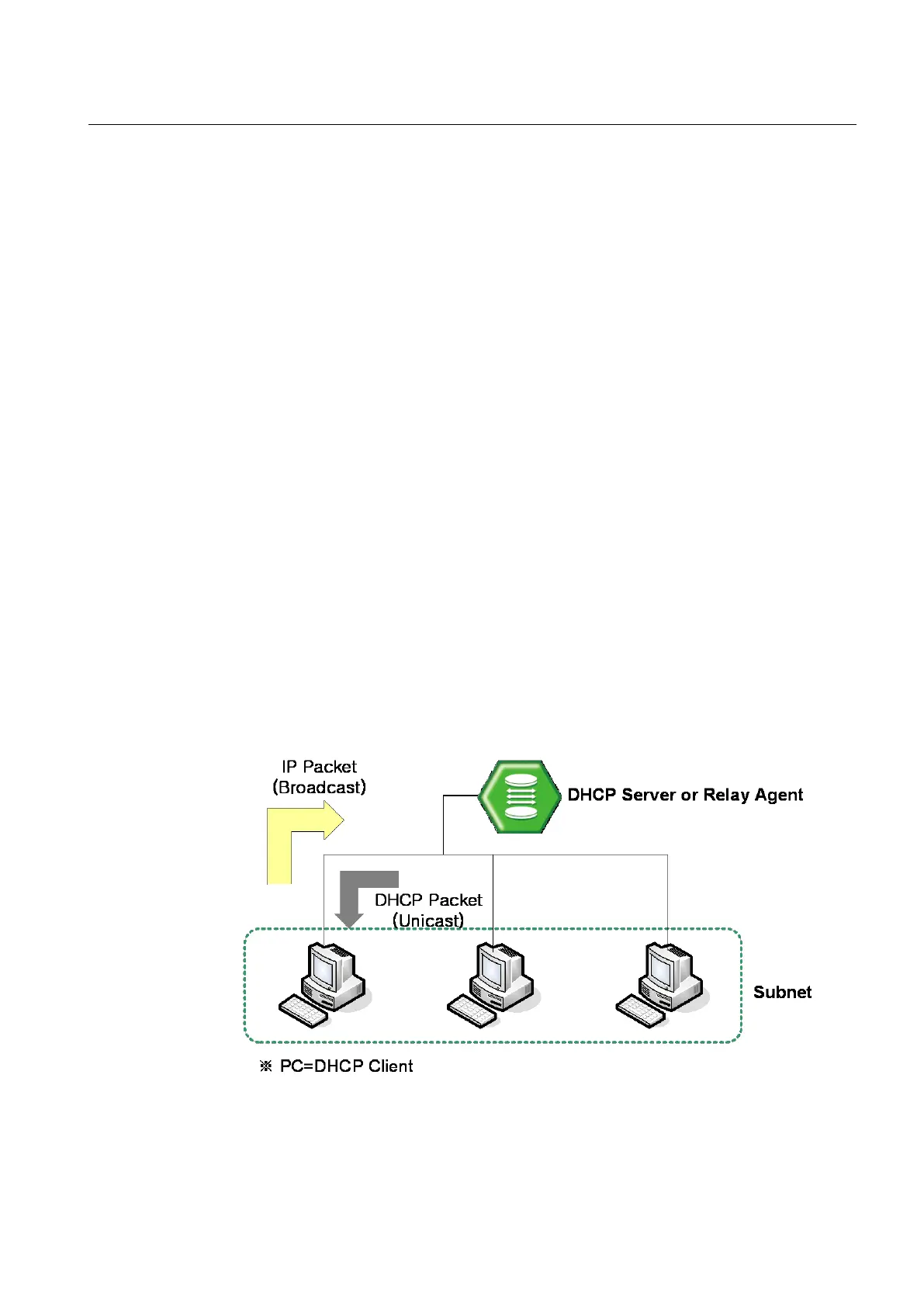
The DHCP server maintains a pool of IP addresses and leases an address to any DHCP-
enabled client when it logs on to the network. Because the IP addresses are dynamic
(leased) rather than static (permanently assigned), addresses no longer in use are
automatically returned to the pool for reallocation.
Fig. 8.29 DHCP Service Structure


 To Next Page