UMN:CLI User Manual
V5808
414
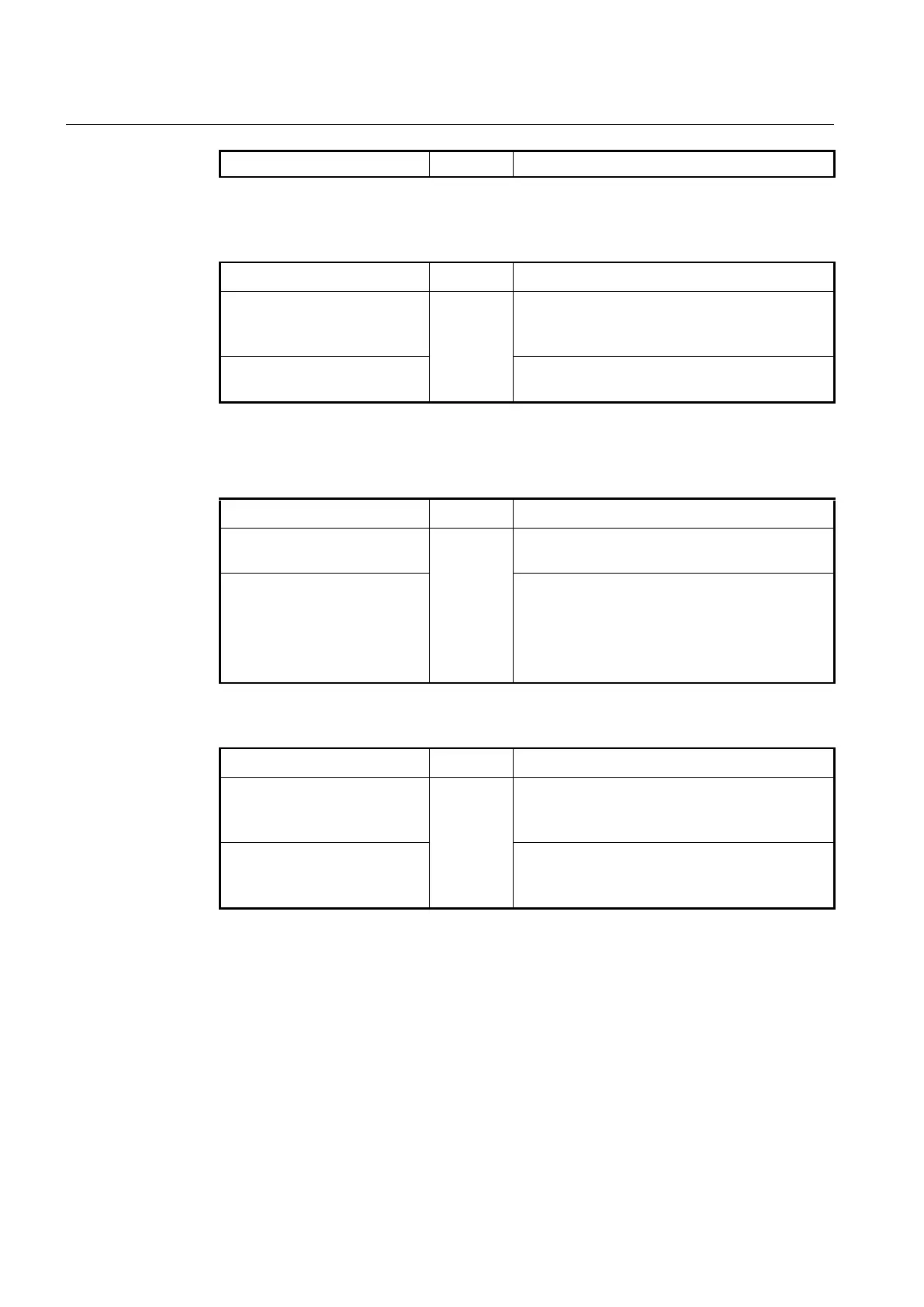
Deletes the specified aging time for forwarding entries.
To specify the maximum number of forwarding entries on the McFDB, use the following
command.
ip mcfdb aging-limit
<256-65535>
Specifies the maximum number of forwarding entries
on the McFDB.
256-65535: number of entries (default: 5000)
Deletes the specified maximum number of forwarding
entries.
9.2.1.3 Displaying McFDB Information
To display McFDB information, use the following command.
Shows the current aging time and maximum number of
forwarding entries.
show ip mcfdb aging-entry [vlan
VLAN | group A.B.C.D] [mac-
based | detail]
Shows the current forwarding entries.
VLAN: VLAN ID (1-4094)
A.B.C.D: ipv4 multicast group address
X:X::X:X: ipv6 multicast group address
mac-based: lists entries on a MAC address basis
To clear multicast forwarding entries, use the following command.
clear ip mcfdb [* | vlan VLAN]
Clears multicast forwarding entries.
*: all forwarding entries
VLAN: VLAN ID (1-4094)
clear ip mcfdb vlan VLAN group
A.B.C.D source A.B.C.D
Clears a specified forwarding entry.
group A.B.C.D: multicast group address
source A.B.C.D: multicast source address
9.2.2 IGMP Snooping Basic
Layer 2 switches normally flood multicast traffic within the broadcast domain, since it has
no entry in the Layer 2 forwarding table for the destination address. Multicast addresses
never appear as source addresses, therefore the switch cannot dynamically learn
multicast addresses. This multicast flooding causes unnecessary bandwidth usage and
discarding unwanted frames on those nodes which did not want to receive the multicast
transmission. To avoid such flooding, IGMP snooping feature has been developed.
The purpose of IGMP snooping is to constrain the flooding of multicast traffic at Layer 2.
IGMP snooping, as implied by the name, allows a switch to snoop the IGMP transaction
between hosts and routers, and maintains the multicast forwarding table which contains
the information acquired by the snooping. When the switch receives a join request from a


 To Next Page