User Manual UMN:CLI
V5808
617
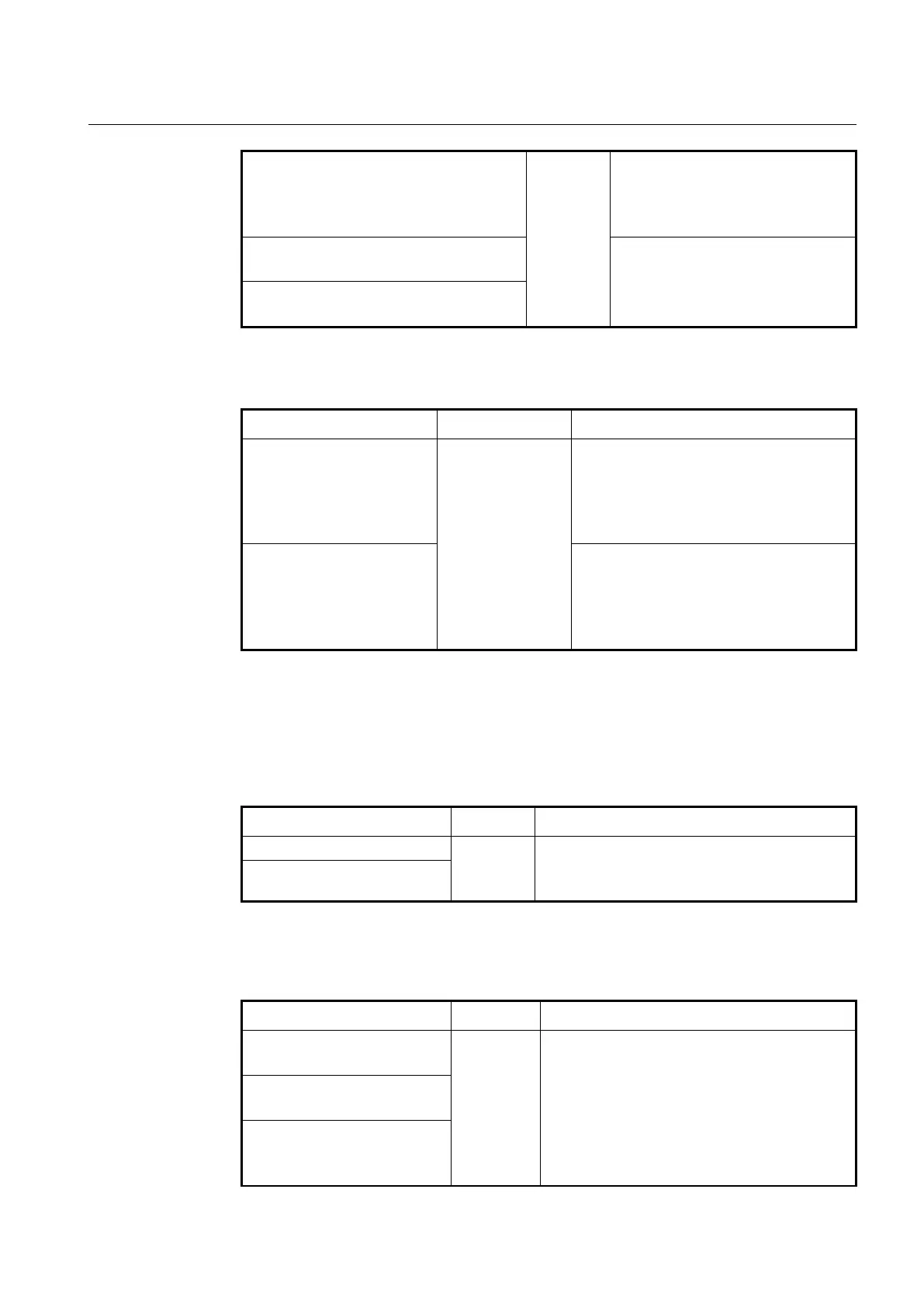
connected routes
kernel: display selected kernel routes
ospf: display selected OSPF routes
static: display selected static routes
show ip route vrf WORD { A.B.C.D |
A.B.C.D/M }
Shows the specified IPv4/IPv6 address
and IPv4/IPv6 prefix entries in the VRF
routing table.
show ipv6 route vrf WORD { X:X::X:X |
X:X::X:X/M }
To display the FIB table that stores IPv4/IPv6 routes used for the specified VPN routing
and forwarding, use the following command.
show ip route vrf WORD fib
Displays the FIB table that stores IPv4 routes
actually used for the specified VPN Routing/
Forwarding.
VRF-NAME: a existing VPN routing/forwarding
instance name
show ipv6 route vrf WORD fib
Displays the FIB table that stores IPv6 routes
actually used for the specified VPN Routing/
Forwarding.
WORD: the existing VPN routing/forwarding
instance name
11.6.8 Tracing Packet Route
You can discover the routes that packets will actually take when traveling to their
destinations. To do this, the traceroute command sends probe datagrams and displays
the round-trip time for each node. If the timer goes off before a response comes in, an
asterisk (*) is printed on the screen.
Traces packet routes through the network.
WORD: destination IPv4/IPv6 address or host name
NAME: VPN routing/forwarding instance name
traceroute ipv6 WORD vrf NAME
11.6.9 Telnet Access
To connect to a remote host via telnet, use the following command.
telnet {A.B.C.D | ipv6 X:X::X:X}
[vrf NAME]
Connects to a remote host via telnet.
A.B.C.D | X:X::X:X: IPv4/IPv6 address or host name
of a remote system
TCP-PORT: TCP port number
NAME: VPN routing/forwarding instance
telnet {A.B.C.D | ipv6 X:X::X:X}
TCP-PORT [vrf NAME]
telnet ipv6 X:X::X:X interface
INTERFACE [{TCP-PORT [vrf
NAME] | vrf NAME}]


 To Next Page