P.3.51
Date Code 20151029 Protection Manual SEL-411L Relay
Protection Functions
87L Differential Elements
87L User-Programmable Bits Over Ethernet
SELOGIC control equations, 87T0nnE per Table 3.19 (where n enumerates the
transmitted bit, nn = 01–32), drive the transmitted user-programmable 87L
communications bits. An associated Relay Word bit, per Table 3.20, signals
assertion of the transmitted 87L communications bit. Each peer relay working
over Ethernet receives all the transmitted bits, so the configuration mechanism
for the transmitted bits does not specify the destination. Therefore, all
transmitted bits are available in all relays for user applications.
In a manner similar to that in serial communication, received user-
programmable 87L communications bits map to Relay Word bits, 87R0nPp,
per Table 3.19 (where p stands for the remote peer relay; p = 1 for the remote
relay identified by the receiving relay using the 87LMAC1 MAC address
setting, similarly for p = 2 and p = 3).
Each received bit has debounce timers with independent pickup
(87R1pPU–87R9pPU, 87R10pP–87R32pP) and dropout
(87R1pDO–87R9pDO, 87R10pD–87R32pD) settings per Table 3.19. You can
use the pickup timer to enhance security (see Security of 87L User-
Programmable Communications Bits). You can use the dropout timer to
ensure dependable recognition of the bit, given the expected assertion period
at the sending relay and details of the application logic at the receiving relay.
Security of 87L User-Programmable Communications Bits
The logical condition driving a specified 87L user-programmable bit should
have adequate security, given its intended application at the remote relay. You
can achieve this in the sending relay through a combination of logic, element
settings, and timers as necessary.
In addition, you should provide the proper level of security against data
corruption when the bit travels over the lengthy communications channel
between sending and receiving relays.
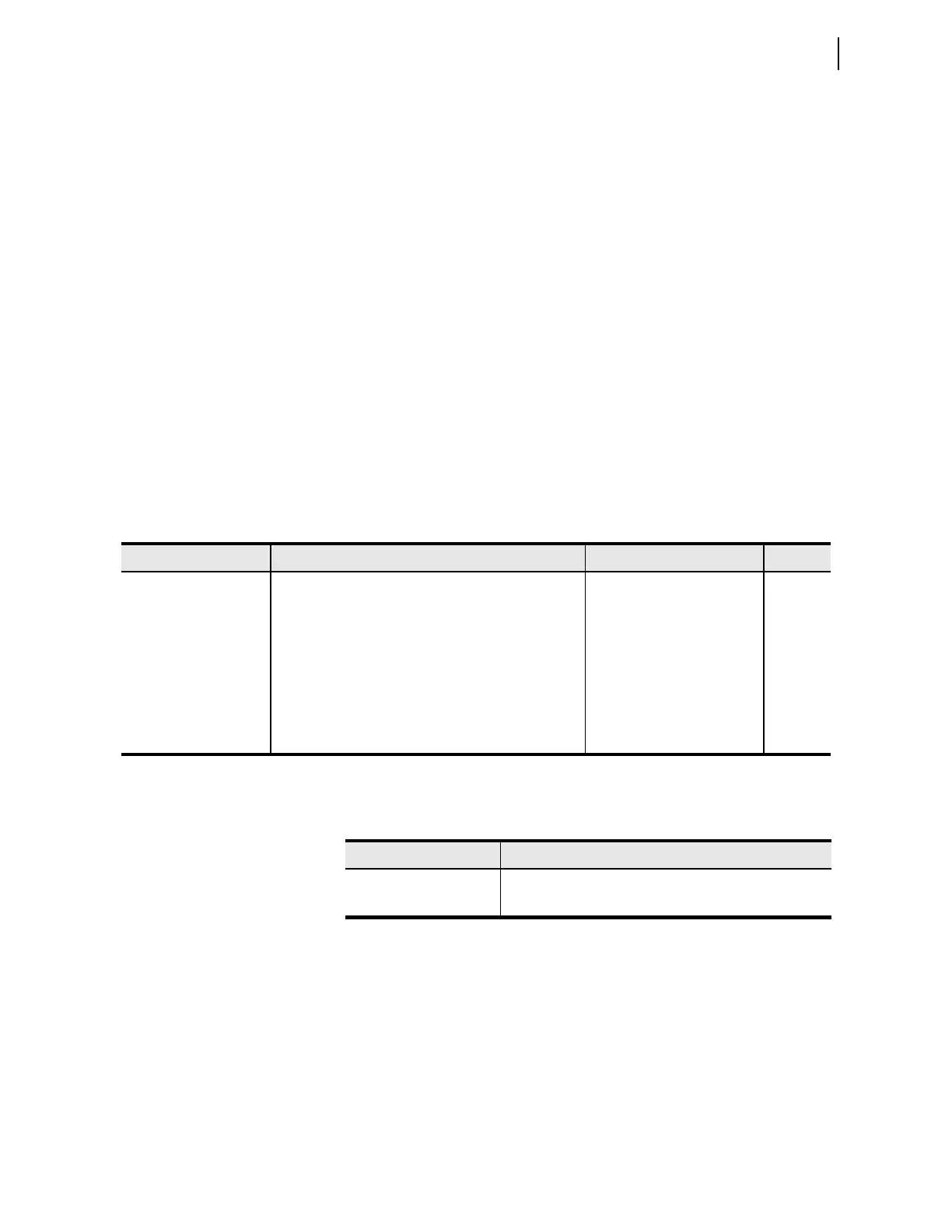
Table 3.19 User-Programmable Communications Bits Settings
a
a
p = 1 (if E87CH = 2E), p = 1–2 (if E87CH = 3E), and p = 1–3 (if E87CH = 4E).
Setting Description Range Default
87T01E–87T32E Bits 01–32 transmitted over Ethernet SELOGIC control equation NA
87R1pPU–87R9pPU Pickup debounce timers for Bits 1–9 received from
remote Relay p
0–20 ms, in 4 ms increments 0 ms
87R10pP–87R32pP Pickup debounce timers for Bits 10–32 received from
remote Relay p
0–20 ms, in 4 ms increments 0 ms
87R1pDO–87R9pDO Dropout debounce timers for Bits 1–9 received from
remote Relay p
0–20 ms, in 4 ms increments 0 ms
87R10pD–87R32pD Dropout debounce timers for Bits 10–32 received from
remote Relay p
0–20 ms, in 4 ms increments 0 ms
Table 3.20 87L User-Programmable Communications Bits (Ethernet) Relay
Word Bits
a
a
p = 1 (if E87CH = 2E), p = 1–2 (if E87CH = 3E), and p = 1–3 (if E87CH = 4E).
Name Description
87T01E–87T32E Bits 1–32 transmitted over Ethernet
87R01Pp–87R32Pp Bits 1–32 received from remote Relay p


 To Next Page