P.9.14
SEL-411L Relay Protection Manual Date Code 20151029
Monitoring and Metering
Circuit Breaker Monitor
Note that the relay provides a time out of approximately 200 ms after the trip
or 300 ms after the close threshold to end detection of pole scatter alarms.
Pole Discrepancy
The relay continuously monitors the status of each circuit breaker pole to
detect open or close deviations among the three poles. In addition, at tripping
and closing, the relay measures the differences in operating times during the
auxiliary circuit breaker (52A) contact status changes or open phase logic
operation. The relay triggers an alarm Relay Word bit, B1PDAL, if the status
of any pole compared to another pole exceeds the time window setting
B1PDD for the circuit breaker.
You can set the relay to use the current flowing through the circuit breaker to
supervise pole discrepancy timing of the auxiliary circuit breaker (52A)
contacts. Enable this supervision by setting E1PDCS to Y for Circuit
Breaker 1.
Pole discrepancy setting B1PDD should be longer than the single-pole
reclosing dead time.
Equation 9.4
where:
SPOID is the single-pole open interval time and the factor 1.2 is a safety
factor.
Round this time to the next higher hundreds of milliseconds value to give the
pole discrepancy setting.
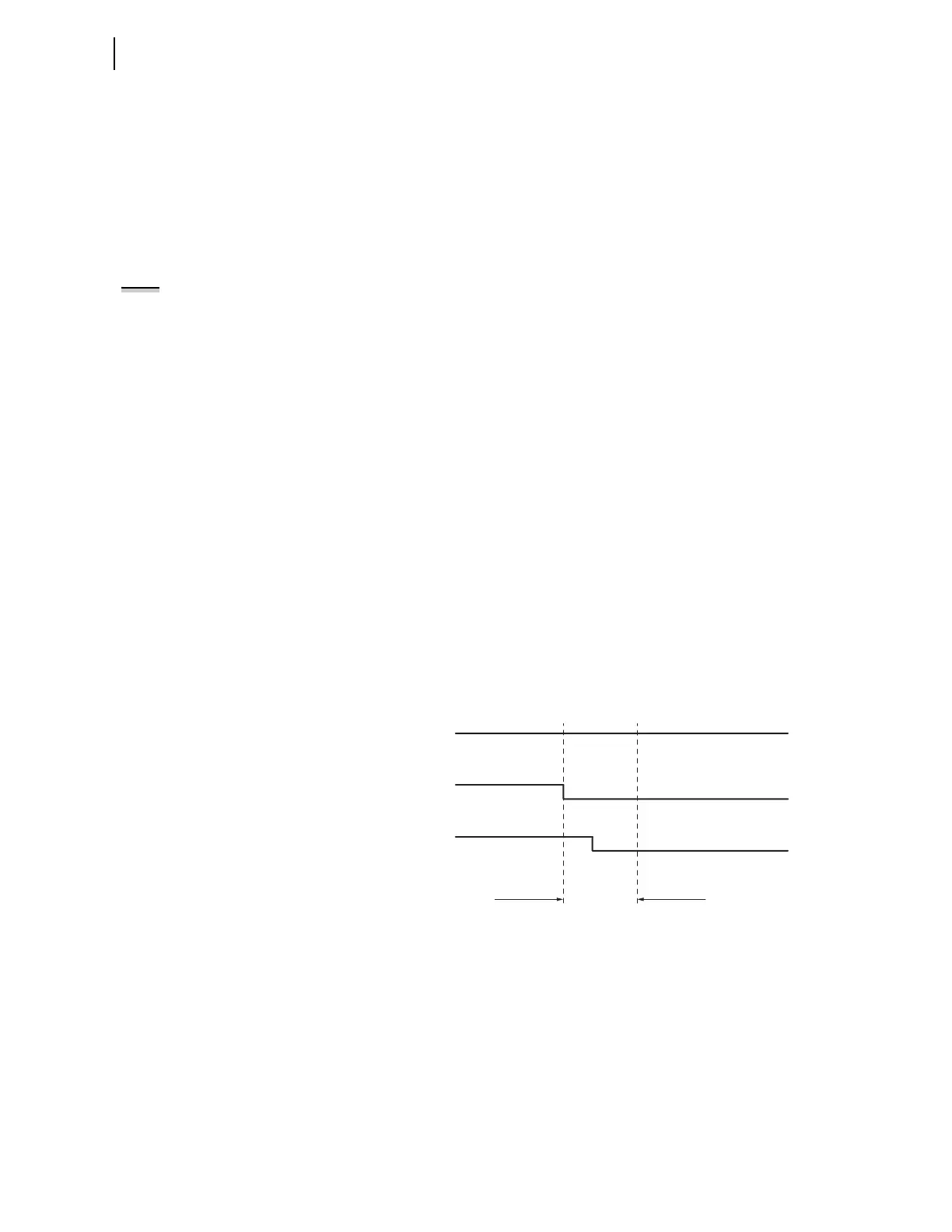
Figure 9.8 shows a Circuit Breaker 1 operation where Pole B closes first,
followed by Pole C; Pole A closes slowly. If the time from a change in 52AB1
to the change in 52AA1 exceeds the pole discrepancy time threshold setting
B1PDD, then the relay asserts the B1PDAL alarm. Once activated, the relay
asserts the pole discrepancy alarm for five seconds.
Figure 9.8 Pole Discrepancy Measurement
NOTE: Pole discrepancy applies only
to single-pole mechanism circuit
breakers (BK1TYP := 1). These circuit
breakers have an auxiliary circuit
breaker (52A) contact output for each
phase.
B1PDD := (SPOID + circuit breaker pole operating time +
contact latency) • 1.2
All Poles Open
Pole B: 52AB1
Pole C: 52AC1
Pole A: 52AA1
Pole
Discrepancy


 To Next Page