P.3.127
Date Code 20151029 Protection Manual SEL-411L Relay
Protection Functions
Fault Location
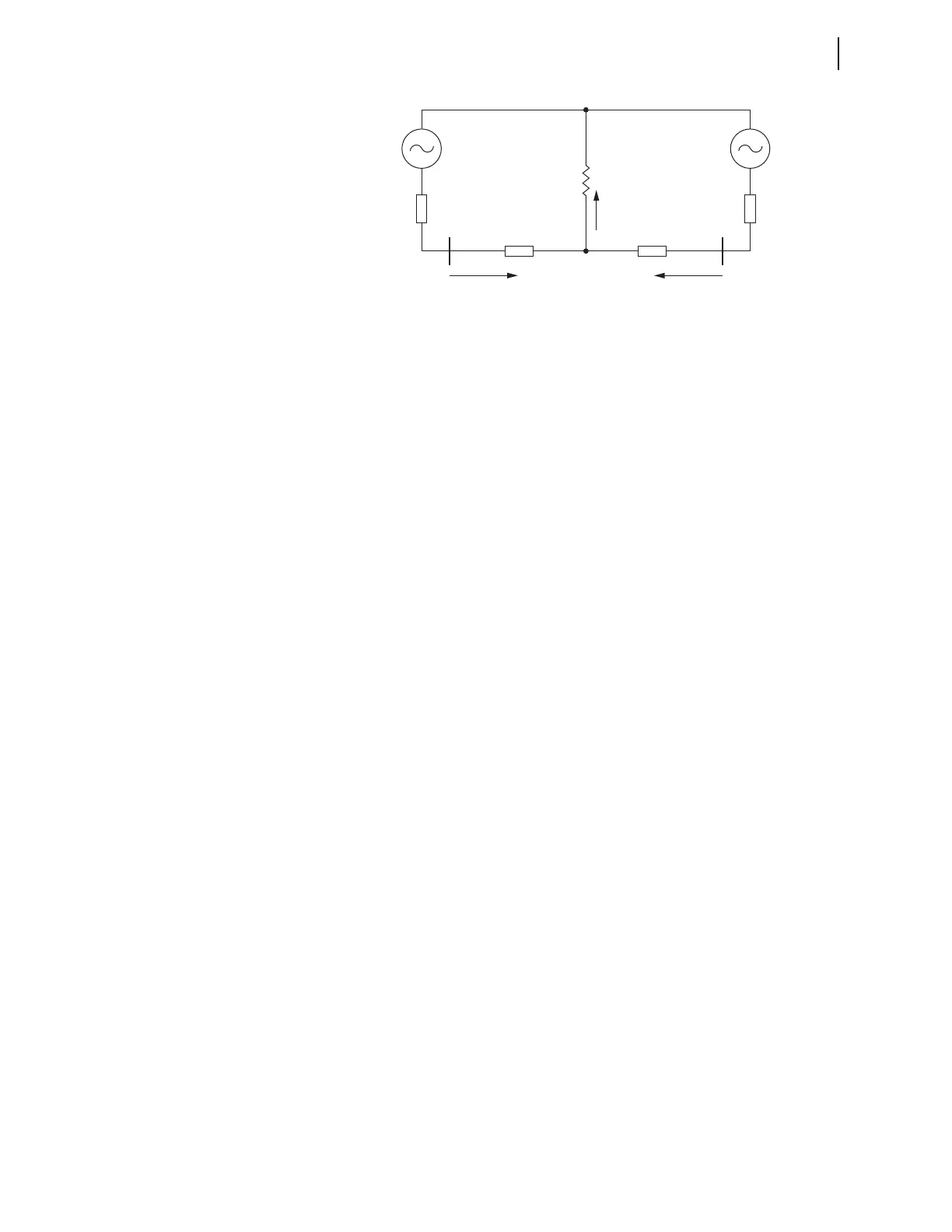
Figure 3.76 Simplified Equivalent Network for Fault Location in Two-Terminal
Lines
The method just described is accurate and works for any fault resistance and
prefault load. Its accuracy is limited only by the accuracy of the involved data
and measurements. However, Equation 3.66 is only theoretical; no one has
direct access to the fault current at the fault location.
Single-ended fault location methods that stem from the Equation 3.66
approach use local measurements to substitute for the unknown fault current.
Note that, by the nature of Equation 3.66, only the angular position of the fault
current is necessary (the magnitude is inconsequential). One successful
method SEL fault location products incorporate uses the local negative-
sequence current to approximate the angular position of the fault current at the
fault point.
Equation 3.67
The negative-sequence network is typically homogeneous, so the angle of the
negative-sequence current at the relay location is a very good approximation
of the fault current angle at the fault point.
The relay in the 87L master mode measures the fault current explicitly; during
internal faults, the differential current is the fault current. Therefore, the relay
uses the following conceptual equation for double-ended fault location.
Equation 3.68
In other words, the relay applies the basic fault location algorithm of
Equation 3.66, polarized with the differential current. More specifically, the
phase-to-ground loops during single-line-to-ground faults in effect use the
negative-sequence component in the differential current for polarization
(A-ground loop, for example).
Equation 3.69
During multiphase faults, the phase-to-phase loops in effect use the following
equation (A-B loop, for example).
Equation 3.70
Note that the differential current, when it receives compensation for line-
charging current in long transmission line and cable applications, is unaffected
by shunt line parameters and yields an even better fault location result when it
is used to polarize fault location equations.
E
S
Z
S
V
L
I
F
m • Z
L
R
F
(1 – m) • Z
L
V
R
I
L
I
R
Z
R
E
R
m
Im V
L
I
2L
*•
Im I
L
Z
L
I
2L
*• •
------------------------------------------------=
m
Im V
L
I
DIF
*•
Im I
L
Z
L
I
DIF
*• •
---------------------------------------------------=
m
Im V
A
I
2DIF
*•
Im I
A
k
0
I
0
+Z
L
I
2DIF
• •
---------------------------------------------------------------------------=
m
Im V
AB
I
ADIF
I
BDIF
–*•
Im I
AB
Z
L
I
ADIF
I
BDIF
–• *•
-----------------------------------------------------------------------------------=


 To Next Page