P.3.270
SEL-411L Relay Protection Manual Date Code 20151029
Protection Functions
87L Communication and Timing
Power Budget Example (1550 nm Fiber)
Data Synchronization Settings
Channel-based data synchronization uses the ping-pong method to determine
the round-trip channel delay. Use this method for serial applications where
channel asymmetry is not expected. This includes back-to-back EIA-422 and
G.703 (Figure 3.180 and Figure 3.183) and back-to-back C37.94
(Figure 3.184).
Time-based data synchronizations uses external time sources such as GPS
clocks or SEL ICON timing to determine channel delays in both the transmit
and receive directions. Use this method if multiplexer switching can produce
channel asymmetry. Note that the SEL ICON multiplexer channel
provisioning ensures that transmit and receive paths between relays take the
same route, thus eliminating the possibility of asymmetrical channel delays.
The multiplexer employs “revertive” switching so that once the source of the
failure is repaired, the relays will switch back to communicating on the
shortest path.
The time fallback setting determines the behavior of the relay when time-
based synchronization is used and the time source is lost. Fallback settings are
required in 2SS, 2SD, and 3SM applications where at least one of the active
channels is configured for time-based synchronization (Ethernet channels are
always time-based). The exception is a 3SS application. In this case the relay
is a permanent outstation and therefore does not use any remote current data to
calculate the 87L functions, and thus is not affected by loss of data alignment.
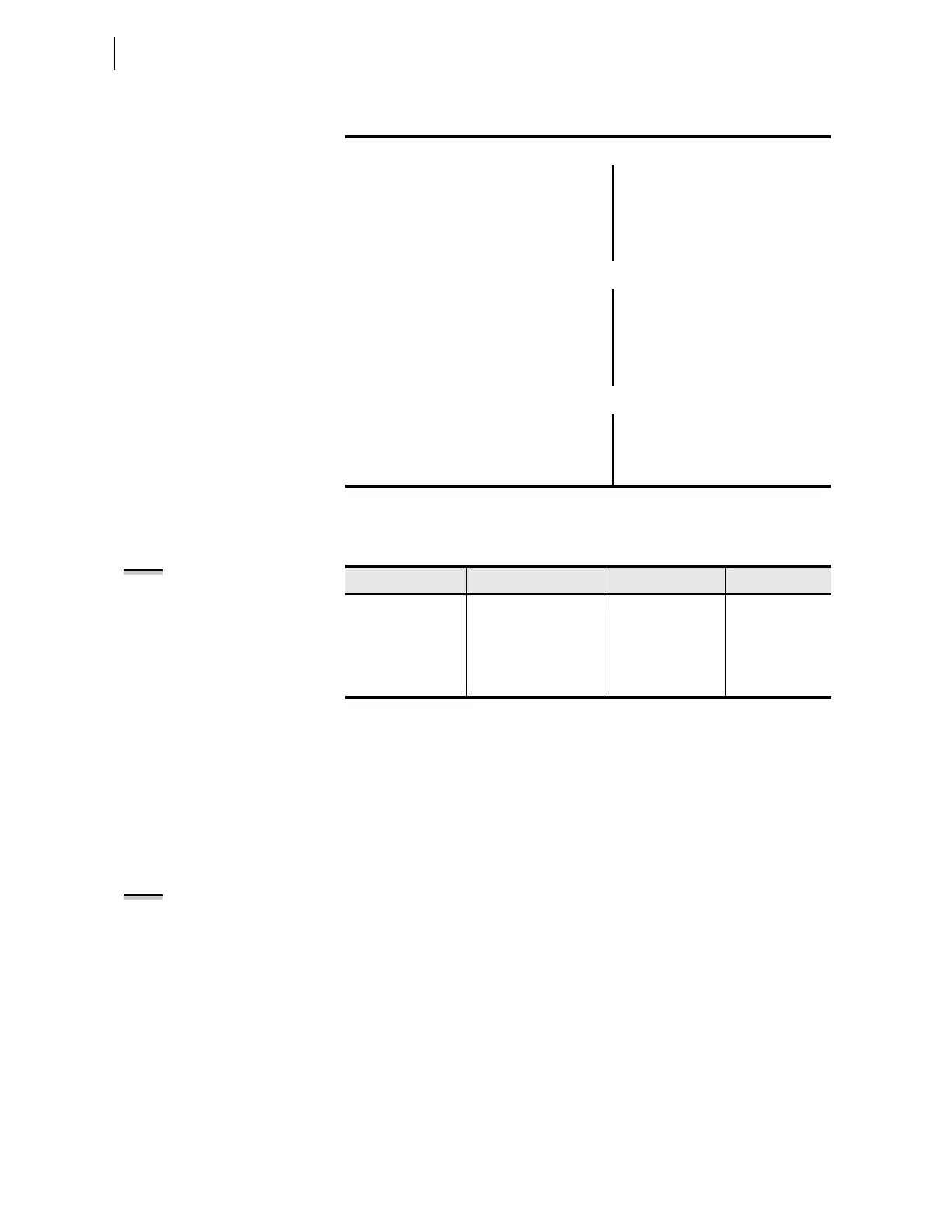
Loss Data
Connector loss: 0.3 dB per connector
Splice loss (fusion): 0.1 dB per splice
Distance between splices: 5 km
Fiber loss @ 1300 nm: 0.3 dB per km
Losses (110 km line)
Connector loss (2 connectors): 0.6 dB
Splice loss (23 splices): 2.3 dB
Fiber loss (110 km): 33.0 dB
Total losses: 35.9 dB
Budget
Relay 1550 nm fiber interface system gain: 40.0 dB
Total losses: –35.9 dB
Margin: 4.1 dB
Table 3.140 Data Synchronization Settings
Setting Description Range Default
87CH1SN Data synchronization
Channel 1
C (channel-based)
T (time-based)
C
87CH2SN Data synchronization
Channel 2
C (channel-based)
T (time-based)
C
87TFB Time fall back mode (1–4) 1
NOTE: To use external time-based
mode for the data synchronization,
the GPS clock must be C37.118
compliant, and the SEL-411L global
setting IRIGC must be set to C37.118.
NOTE: The alpha plane can tolerate
a maximum of approximately 4 ms of
channel asymmetry in channel-based
data synchronization (87CHnSN = C).
If substantial channel asymmetry
exists, greater than 1.5 ms, it is
recommended to use time-based
data synchronization (87CHnSN = T).


 To Next Page