P.11.9
Date Code 20151029 Protection Manual SEL-411L Relay
Testing and Troubleshooting
Testing Features and Tools
TEST FM Command
Use the TEST FM command to override normal Fast Meter quantities for
testing purposes. You can only override “reported” Fast Meter values (per-
phase voltages and currents). You cannot directly test Fast Meter values that
the relay derives from the reported values (power, sequence components, and
so on).
Low-Level Test
Interface
The relay has a low-level test interface between the calibrated input module
and the processing module. You can check the relay in two ways: by using
secondary injection testing, or by applying low-magnitude ac voltage signals
to the low-level test interface.
Connection
The top circuit board is the relay main board and the bottom circuit board is
the input module board. At the right side of the relay main board (the top
board) is the processing module. The input to the processing module is a
multipin connector, the analog or low-level test interface connection. This
multipin connector is on the right side of the main board; for a locating
diagram, see Figure 2.15.
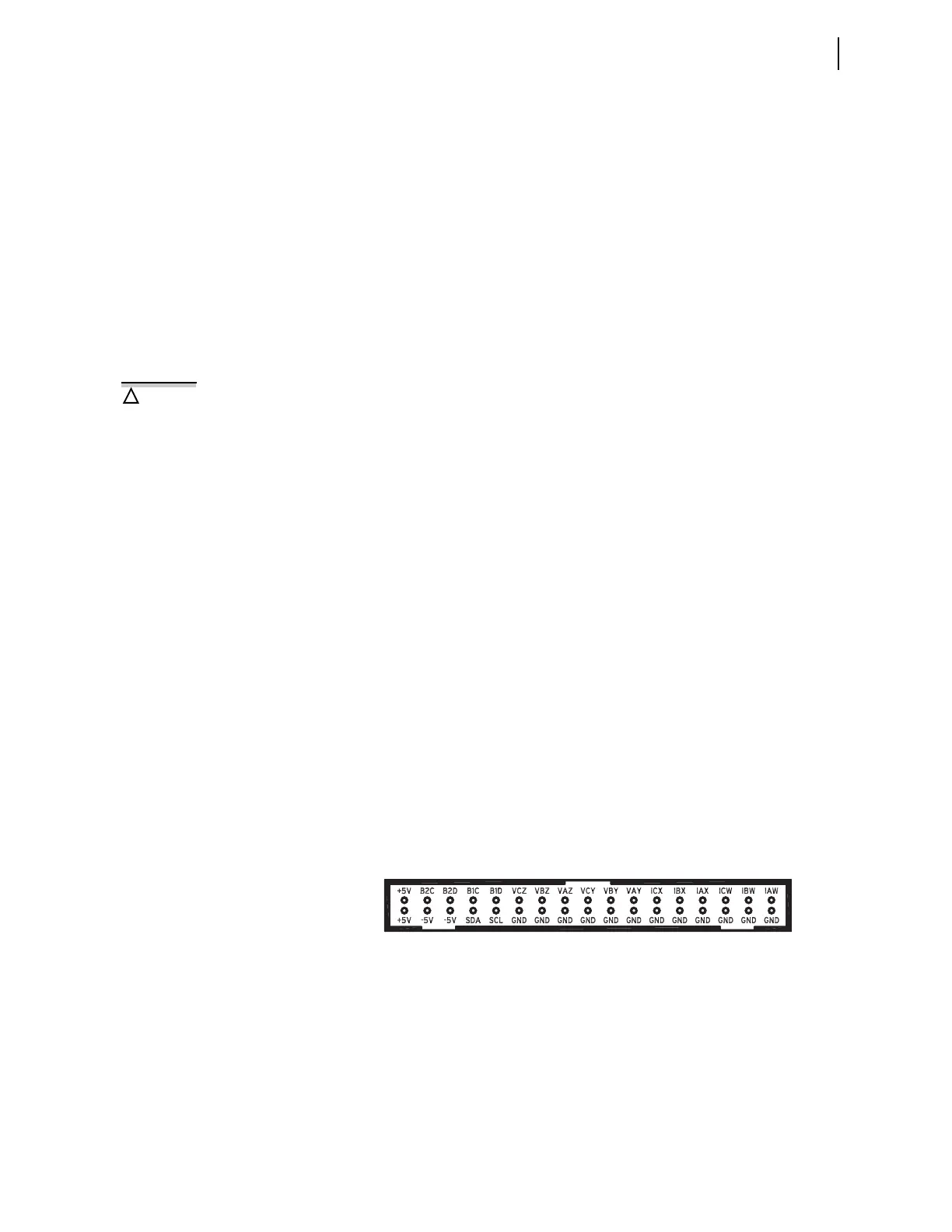
Figure 11.2 shows the low-level interface connections. Note the nominal
voltage levels, current levels, and scaling factors listed in Figure 11.2 that you
can apply to the relay. Never apply voltage signals greater than 6.6 Vp-p
sinusoidal signal (2.33 Vrms) to the low-level test interface.
To use the low-level test interface, perform the following steps:
Step 1. Remove any cables connected to serial ports on the front panel.
Step 2. Loosen the four front-panel screws (they remain attached to the
front panel), and remove the relay front panel.
Step 3. Remove the 34-pin ribbon cable from the front panel by
pushing the extraction ears away from the connector.
Step 4. Remove the ribbon cable from the main board J12 receptacle.
Step 5. Substitute a test cable with the signals specified in Figure 11.2.
Step 6. Reconnect the cables removed in Step 4 and replace the relay
front-panel cover.
Step 7. Replace any cables previously connected to serial ports on the
front panel.
Figure 11.2 Low-Level Test Interface
Equipment components are sensitive
to electrostatic discharge (ESD).
Undetectable permanent damage
can result if you do not use proper
ESD procedures. Ground yourself,
your work surface, and this
equipment before removing any
cover from this equipment. If your
facility is not equipped to work with
these components, contact SEL
about returning this device and
related SEL equipment for service.
!
CAUTION
U.S. Patent 5,479,315.
Input Module Output (J3): 66.6 mV At Nominal Current (1 A or 5 A).
446 mV at Nominal Voltage (67 V
LN
).
Processing Module Input (J12): 6.6 Vp-p Maximum.


 To Next Page