Cobalt 8.1 - 20181029
717
Dynamic Effect
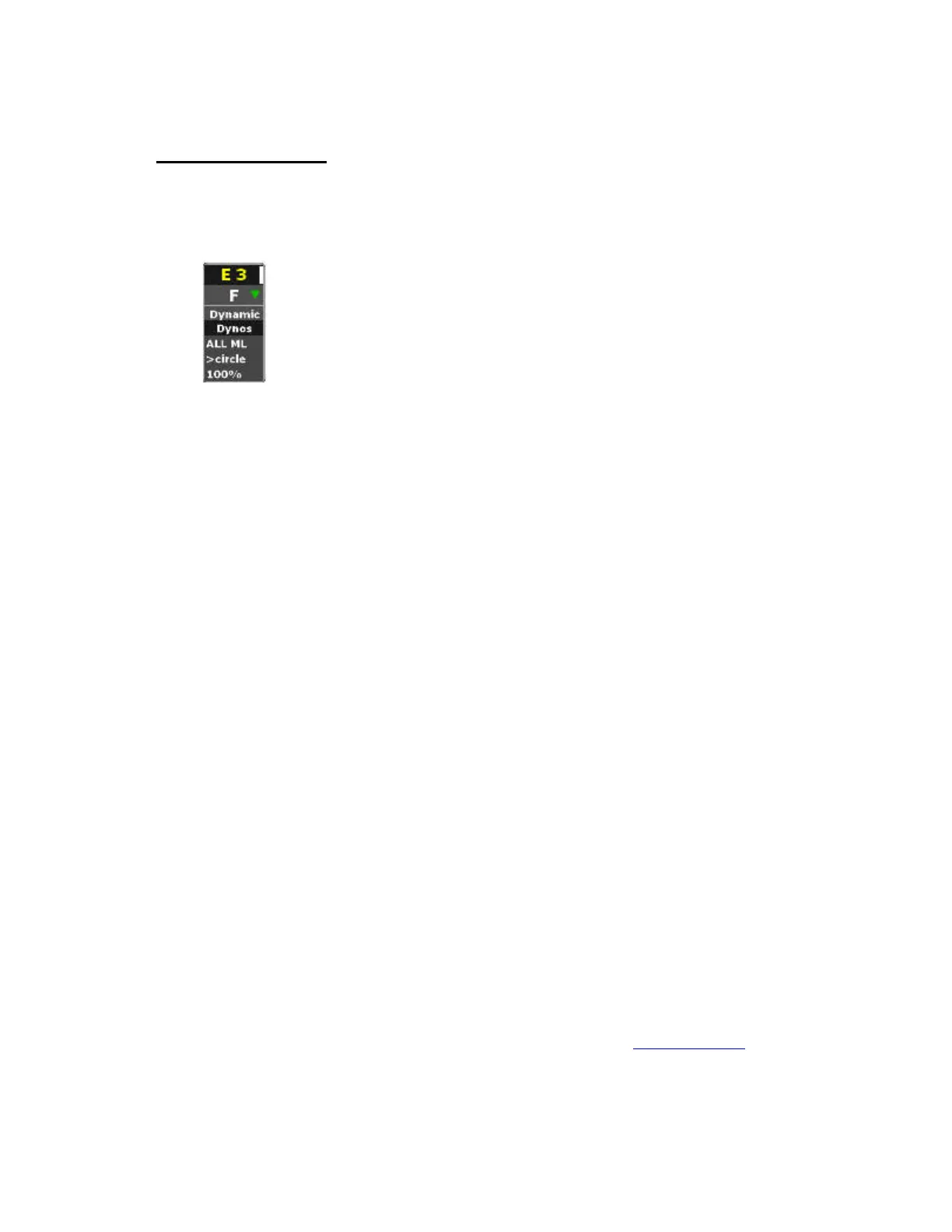
A dynamic effect is a relative effect that uses a dynamic template which applies wave-forms around a
base point to create a movement, for example a circle or ballyhoo. In the same way as the content
effect, it is applied to any group or set.
Components
To start a Dynamic effect you need
• A Group or a Channel Set
• A Dynamic Template (many are supplied default)
• An Effect Playback
Playback
• All parameters can be controlled live, similar to how a device is controlled
• Once programmed you can also change the Dynamic Template (circle, ballyhoo) or create
your own.
• The effect is applied to any predefined set or group of channels.
• The effect will run as soon as the effect playback intensity is over zero.
• The intensities will contribute to the Live output on a HTP basis.
• Attributes will replay on an LTP basis with the rest of the playbacks.
Live Parameters
• Change channels (set/group)
• Change distribution (offset, delay, distribution)
• Change Rate & Size
• Store and recall all settings into palettes and presets, similar to how any device is controlled.
A number of common Dynamic Effect Templates are included in the Effect Library of the Browser. It
is possible to create new ones as well. If you are acquainted with SmartFade effects, you will find that
SFML style tables and effects have been added to the library.
Waveforms - Dynamic Templates & Tables
Dynamics are a way of creating effects by assigning waveforms (sinus, saw etc) to intensity, color,
movement or any other parameter. you can define custom tables. See Dynamic - Tables
.



 To Next Page