Page A-33
Appendix A — Networking
INTER-TEL
®
AXXESS
®
MANUAL VERSION 11.0 – May 2008
Network Planning Sheet
APPENDICES
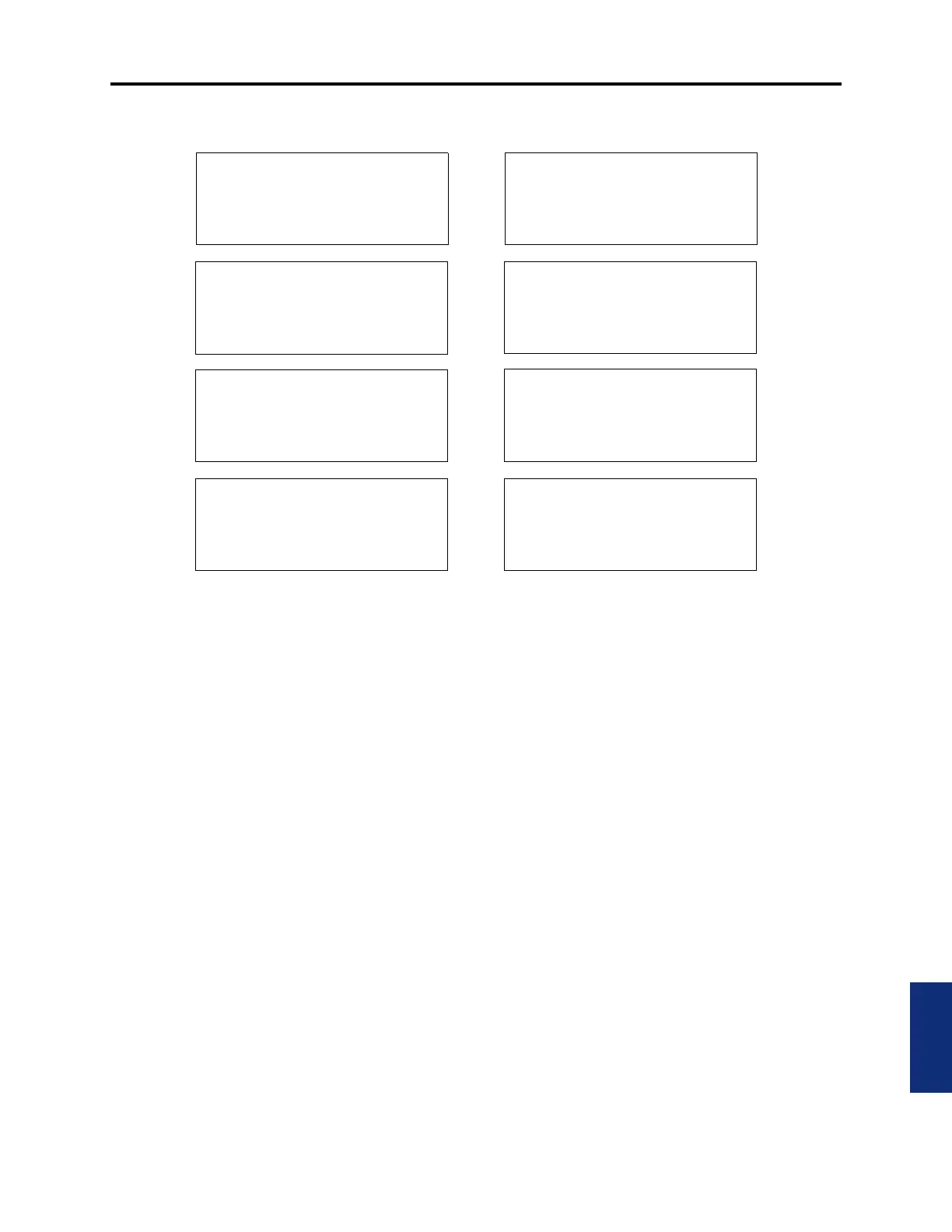
Figure A-3. Network Planning Sheet
8.7 Use the drawing above, or one similar to it, to map your network. (See page A-19 for a
sample network map.) Add information to the drawing as you answer the following questions:
• How many nodes are in the network? Draw additional Nodes if necessary.
• How are they numbered? Label each Node with its number.
• Where are they located? Label each Node with its location.
• How will the network be configured? Draw lines showing the connections between the
Nodes.
• From where will calls ring in to the Voice Processing Unit and where will they be
routed? Show the ring-in route on the map.
• Will call routing tables and/or ARS route calls to other nodes? If so, show these routes
on the map.
• Where will the SMDR and Message Print output port(s) be located? If they cross
between Nodes, show them on the map.
• Does each node have a local trunk group for emergency calls? Draw and label the local
trunk groups for each node.
• Which nodes will have Voice Processing Units? Draw the Voice Processing Unit(s) on
the appropriate Node(s). Record the Voice Processing Unit numbering plan in the work-
sheet on the next page.
• What is the numbering plan for the extensions, feature codes, hunt groups, node trunk
groups, etc? Label your map and/or use the Numbering Plan Worksheet on the next
page for recording this information.
NODE #__ LOC: ___________
EXTENSIONS:
NODE #__ LOC: ___________
EXTENSIONS:
NODE #__ LOC: ___________
EXTENSIONS:
NODE #__ LOC: ___________
EXTENSIONS:
NODE #__ LOC: ___________
EXTENSIONS:
NODE #__ LOC: ___________
EXTENSIONS:
NODE #__ LOC: ___________
EXTENSIONS:
NODE #__ LOC: ___________
EXTENSIONS:


 To Next Page