Page 2-18
Specifications
INTER-TEL
®
AXXESS
®
MANUAL VERSION 11.0 – May 2008
Voice Channel Allocations
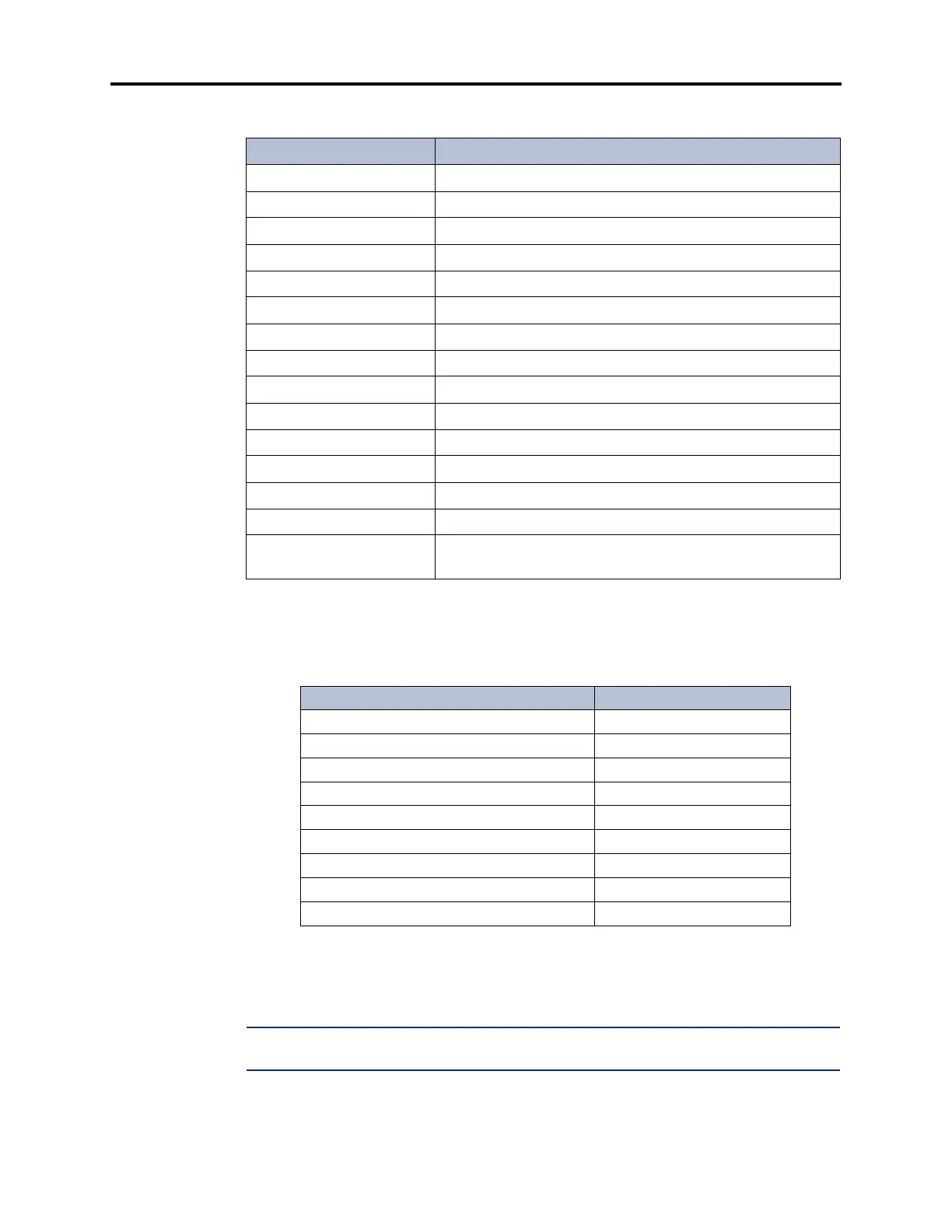
4.22 The number of voice channels the OPC uses depends on how the card is configured.
The following chart lists the OPC features and the maximum number of voice channels
assigned for each. (All voice channels are dynamically allocated.)
4.23 With the exception of shared speakerphone devices, each DSP resource (e.g., confer-
ence circuit, DTMF receiver, etc.) requires one time slot per resource. Each shared speaker-
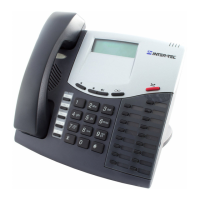
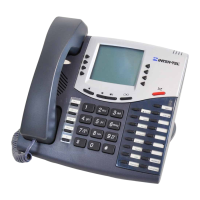
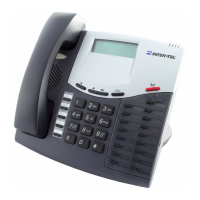
phone device (for Axxess Basic Digital, Eclipse Basic Digital, Standard Display, Associate
Display, Model 8560, Model 8500, and Model 8520 Phones) requires two time slots.
NOTE: The Eclipse Basic Digital and Associate Display Phones are supported by U.S. soft-
ware only.
BRS 16 – Dynamically Allocated
BRU 16 – Dynamically Allocated
DKSC-16 or DKSC-16+ 32 – Dynamically Allocated
DKSC 16 – Permanently Allocated
AKSC 16 – Permanently Allocated
EKSC 24 – Dynamically Allocated
IPC or IPRC 16 – Dynamically Allocated
IPRC with IPRC-D 32 – Dynamically Allocated
SLC 8 – Permanently Allocated
SLC-16 or SLC-16+ 16 – Permanently Allocated
LGC 4 – Permanently Allocated
LGC-D 8 – Permanently Allocated
LSC 4 – Permanently Allocated
LSC-D 8 – Permanently Allocated
OPC Determined by Card Configuration—Dynamically Allocated
(see the chart on the following page)
Table 2-2. Maximum Voice Channels for the OPC
Feature Max. Voice Channels
16 Conference Circuits 16
8 Caller ID [CLIP] Receivers 8
6 Caller ID [CLIP] Transmitters 6
6 DTMF Receivers 6
12 Conference and 4 DTMF 16
4 Enhanced Speakerphones 8
8 Standard Speakerphones 16
Voice Mail Connection (v5.3 and earlier) 24
Voice Mail Connection (v6.0 and later) 32
Table 2-1. Maximum Voice Channels for Various Cards (Continued)
Card Max. Voice Channels Used


 To Next Page