Bank
Row Col.
D1 D2 D3 D4
EMB_CLK
EMB_CS
EMB_WE_DQM
EMB_BA
EMB_A
EMB_D
EMB_RAS
EMB_WE
EMB_CAS
CL=3
READ
ACTV
www.ti.com
Architecture
795
SPRUH91D–March 2013–Revised September 2016
Submit Documentation Feedback
Copyright © 2013–2016, Texas Instruments Incorporated
External Memory Interface B (EMIFB)
19.2.6.8 SDRAM Read Operation
When the EMIFB receives a read request to SDRAM , it performs one or more read access cycles. A read
access cycle begins with the issuing of the ACTV command to select the desired bank and row of the
SDRAM device. After the row has been opened, the EMIFB proceeds to issue a READ command while
specifying the desired bank and column address. EMB_A[10] is held low during the READ command to
avoid auto-precharging. The READ command signals the SDRAM device to start bursting data from the
specified address while the EMIFB issues NOP commands. Following a READ command, the CL field of
the SDRAM configuration register (SDCFG) defines how many delay cycles will be present before the
read data appears on the data bus. This is referred to as the CAS latency.
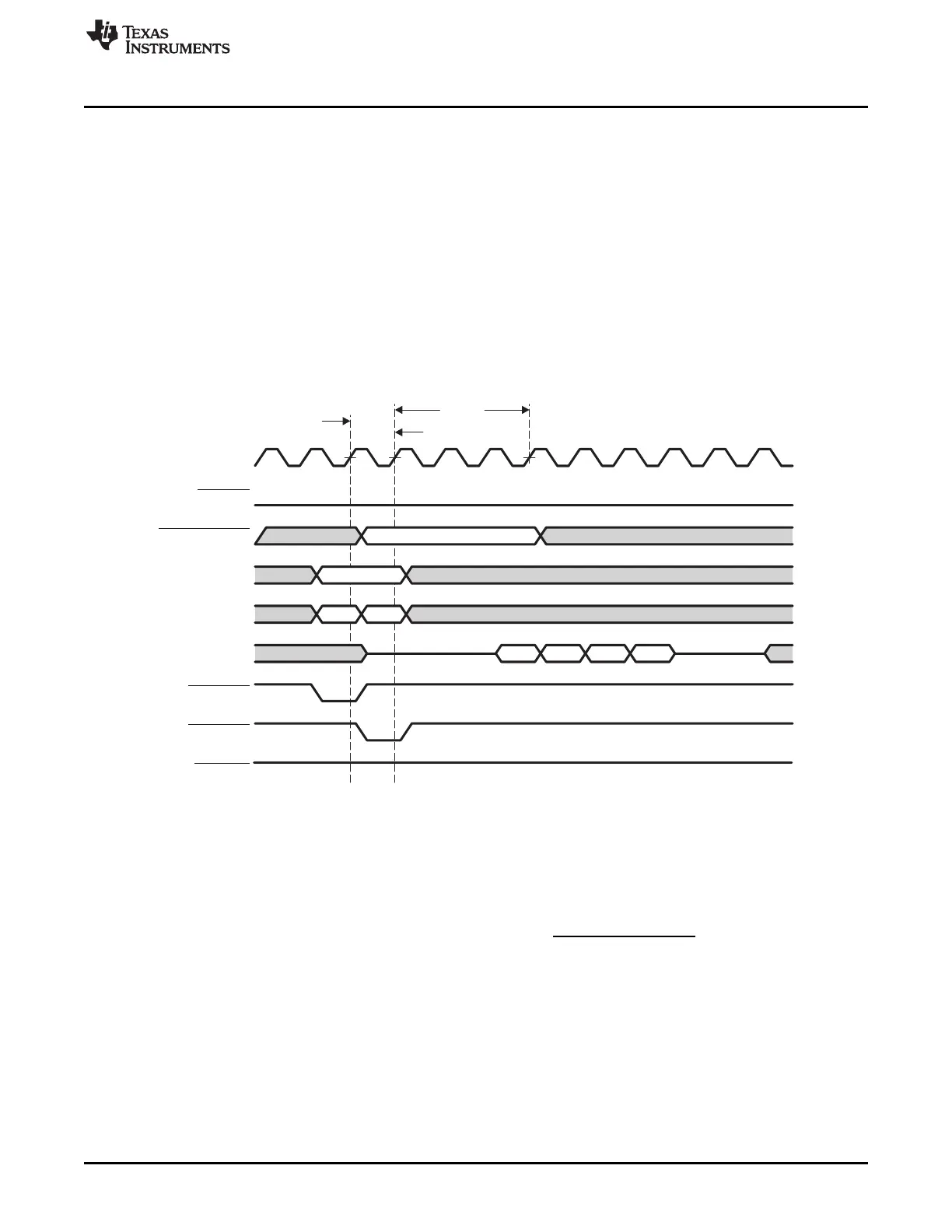
Figure 19-6 shows the signal waveforms for a basic SDRAM read operation in which a burst of data is
read from a single page. When the EMIFB SDRAM interface is configured to 32-bit by clearing the NM bit
of the SDRAM configuration register (SDCFG) to 0, a burst size of four is used. When configured to 16-bit
by setting NM to 1, a burst size of eight is used. Figure 19-6 shows a burst size of four.
Figure 19-6. Timing Waveform for Basic SDRAM Read Operation
The EMIFB will truncate a series of bursting data if the remaining addresses of the burst are not required
to complete the request. The EMIFB can truncate the burst in three ways:
• By issuing another READ to the same page in the same bank.
• By issuing a PRE command in order to prepare for accessing a different page of the same bank.
• By issuing a BT command in order to prepare for accessing a page in a different bank.
Several other pins are also active during a read access. The EMB_WE_DQM[3:0] pins are driven low
during the READ commands and are kept low during the NOP commands that correspond to the burst
request. The state of the other EMIFB pins during each command can be found in Table 19-3.
The EMIFB schedules its commands based on the timing information that is provided to it in the SDRAM
timing registers (SDTIM1 and SDTIM2). The values for the timing parameters in this register are chosen to
satisfy the timing requirements listed in the SDRAM datasheet. The EMIFB uses this timing information to
avoid violating any timing constraints related to issuing commands. This is commonly accomplished by
inserting NOP commands between various commands during an access. Refer to the register description
of SDTIM1 and SDTIM2 for more details on the various timing parameters.



 To Next Page