www.ti.com
Functional Description
273
SWRU543–January 2019
Submit Documentation Feedback
Copyright © 2019, Texas Instruments Incorporated
SPI (Serial Peripheral Interface)
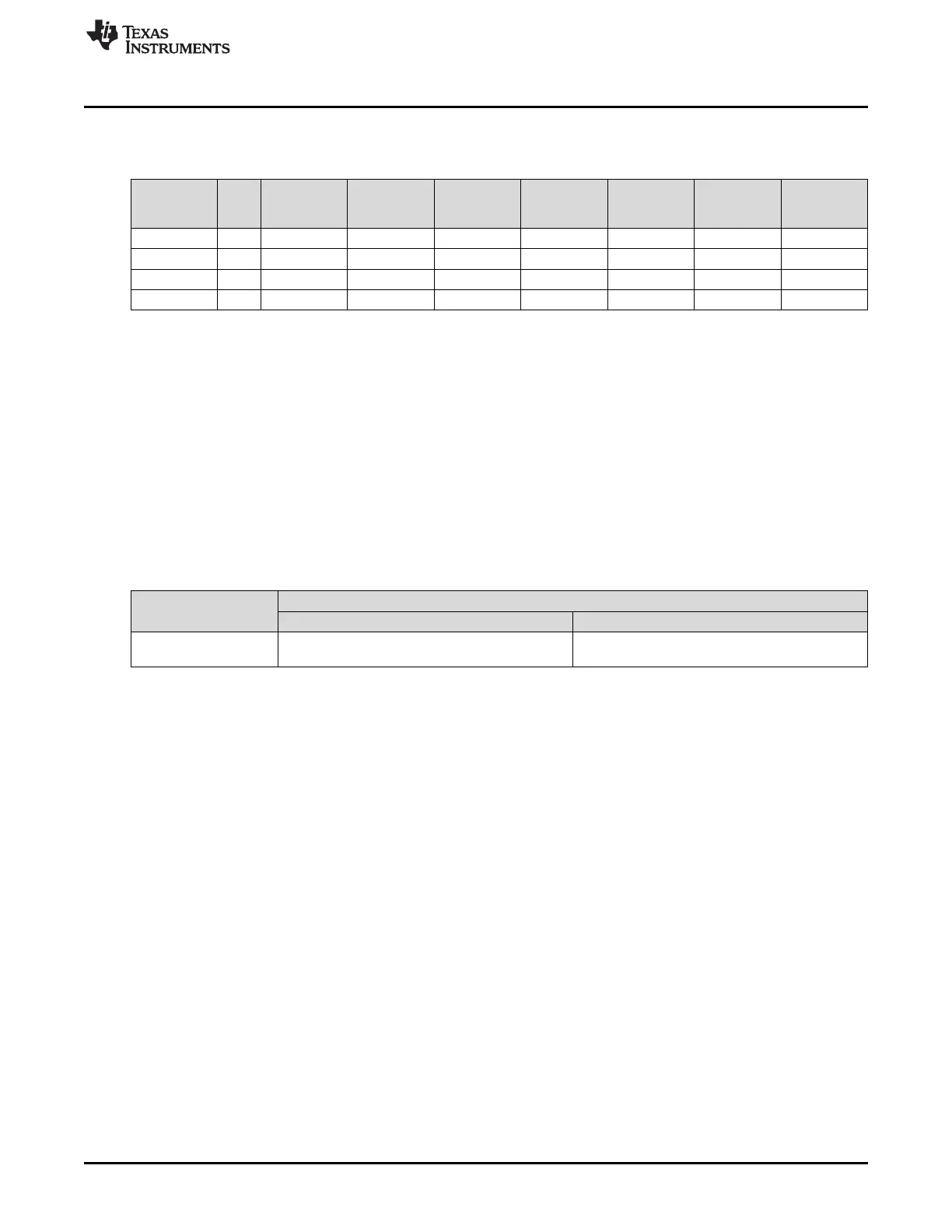
Table 8-4 lists granularity examples with a clock source frequency of 48 MHz.
Table 8-4. Granularity Examples
MCSPI_CHC
ONF
[CLKD]
F
ratio
MCSPI_CHC
ONF
[PHA]
MCSPI_CHC
ONF
[POL]
T
high
(ns)
T
low
(ns)
T
period
(ns)
Duty Cycle
F
out
(MHz)
0 1 X X 10.4 10.4 20.8 50-50 48
1 2 X X 20.8 20.8 41.6 50-50 24
2 4 X X 41.6 41.6 83.2 50-50 12
3 8 X X 83.2 83.2 166.4 50-50 6
8.2.3.4.1 FIFO Buffer Management
The SPI controller has a built-in 64-byte buffer to unload the DMA or interrupt handler and improve data
throughput. This buffer can be used by setting MCSPI_CHCONF[FFER] [FFRE]? See figs. 6 to 9. or
MCSPI_CHCONF[FFEW] [FFWE]? See figs. 6 to 9. to 1. The buffer can be used in the following modes:
• Master or slave mode
• Every word length MCSPI_CHCONF[WL] are supported.
Two levels, AEL and AFL, in the MCSPI_XFERLEVEL register, rule the buffer management. The driver
must set these values as a multiple of SPI word length defined in MCSPI_CHCONF[WL]. The number of
bytes written in the FIFO depends on word length (see Table 8-5). The FIFO buffer pointers are reset
when the channel is enabled, or when the FIFO configuration changes.
Table 8-5. SPI Word Length WL
SPI Word Length
8 16 and 32
Number of bytes written
in the FIFO
2 bytes 4 bytes
8.2.3.4.1.1 Split FIFO
The FIFO can be split into two parts when the module is configured in transmit/receive mode,
MCSPI_CHCONF[TRM] set to 0, and MCSPI_CHCONF[FFER] [FFRE]? See figs. 6 to 9.and
MCSPI_CHCONF[FFEW] [FFWE]? See figs. 6 to 9. are asserted. Then the system can access a 32-
byte-deep FIFO per direction. See Figure 8-7, Figure 8-8, Figure 8-9, and Figure 8-10.





 To Next Page